BeBlue
Specific objective: SO6 – Promoting the transition to a circular and resource efficient economy
Typology: capitalisation project
The agri-food sector in the programme area is going through a very difficult time, revealing its fragility and vulnerability not only to the effects of climate change but also to the consequences of the recent pandemic and the ongoing armed conflict. Therefore, it is crucial to develop circular and resource efficient food production systems, which are less dependent from energy and raw material and can provide locally sourced high quality sustainable products. In this context, BeBlue - Beyond Bluegrass aims at capitalizing the achievements of the BLUEGRASS project, which successfully introduced in the programme area aquaponics, a sustainable and innovative food production technology based on circular economy principles. Aquaponics combines soilless agriculture and fish farming in a single recycling system that optimizes the use of natural resources needed to produce fish feed. Cross-border cooperation is a qualifying and essential element of the project, which will allow the achievement of the project objectives: BeBlue partners will ensure the integration of technical-scientific expertise, connections with operators/stakehold and capacity of involving them in participatory processes.
BeBlue aims to disseminate aquaponics through actions aimed at:
- facilitating the management of aquaponic systems, through digitalization;
- attracting investments, by developing tools for assessing environmental and economic sustainability, which can be used in the preparation of business plans;
- extending the range of products, by combining the production of marine fish with that of salicornia, a plant that can tolerate high salinity, and macroalgae;
- adding value to products, by informing consumers, large-scale retailers and operators in the HORECA sector;
- including aquaponics in urban regeneration plans.
BeBlue - Beyond Bluegrass aims at capitalizing the achievements of the BLUEGRASS project, which successfully introduced in the programme area aquaponics, a sustainable and innovative food production technology based on circular economy principles.
Digitalization of Aquaponic Systems
Adapting to climate change requires particular attention to the use of water resources, which are expected to become increasingly scarce even in areas traditionally rich in water, such as the Italy–Slovenia cooperation programme area. In this context, soilless cultivation is becoming an increasingly important alternative to traditional farming methods. Hydroponic production systems allow for significant water savings compared to conventional cultivation. At the same time, water scarcity is becoming a growing challenge for freshwater aquaculture, particularly for trout farming.
Within this framework, the BeBlue project tested two innovative integrated production systems:
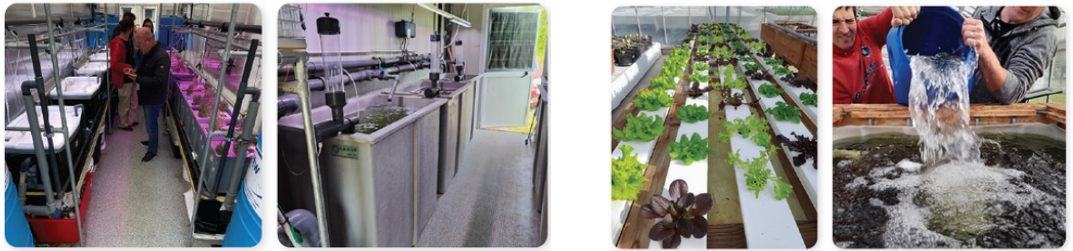
Marine aquaponics: production of sea bream, halophytic plants (especially Salicornia), and macroalgae.
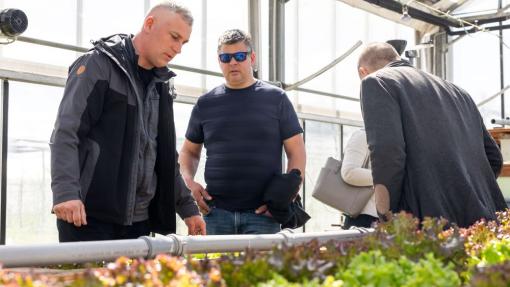
Aquaponic trout farming: production of rainbow trout, lettuce, and microgreens.
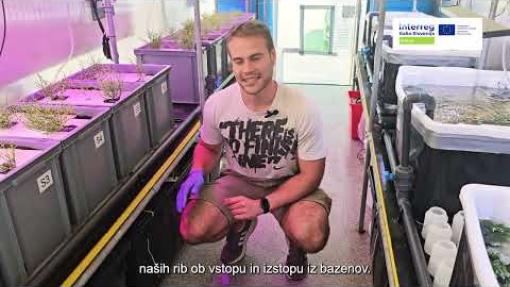
The first innovation was tested at the pilot facility managed by Ca’ Foscari University of Venice, while the second was implemented at the facility managed by the University of Ljubljana. Both systems were originally established within the Bluegrass project and were further digitalized by equipping them with automatic sensors to monitor key water quality parameters.
| See the details here | See the systems here |
| See the details here | See the systems here |
Prototype of a Digital Twin for an Aquaponic System
Aquaponic systems are more complex than both recirculating aquaculture systems (RAS – Recirculating Aquaculture Systems) and hydroponic soilless cultivation systems. Their management must ensure optimal conditions for the welfare and growth of both fish and plants, while also maintaining water temperatures within ranges that allow the bacterial community to efficiently convert ammoniacal nitrogen into nitrate. This requires expertise in both agronomy and aquaculture. Such knowledge becomes even more critical as the production scale increases, and consequently the risk of product loss due to inappropriate or delayed management actions grows. During the design phase, it is also important to properly size the system components, particularly the fish biomass and stocking density in relation to the surface area allocated for plant cultivation. Currently, there are no freely accessible tools that facilitate the design and management of aquaponic systems while taking into account the temporal development of the biomasses intended to be co-produced. For this reason, one of the main activities of the BeBlue project is the development and application of a Digital Twin (DT) of an aquaponic system. A Digital Twin can be defined as a digital representation of a system that provides insights into the evolution of its state over time.
More details are available in the documents below.
| See the details here |
The DiGiPonic Interface
DiGiPonic is a free web-based platform with a simple and intuitive interface designed to support the design and management of aquaponic systems. The interface provides two main functions:
Design:
It helps users properly size the system (fish farming and hydroponic greenhouse) based on a few inputs provided by the user, such as the species to be farmed, the desired annual production, and climatic conditions.Management:
It facilitates the operation of the system by providing guidance on fish feeding, monitoring pH and dissolved oxygen levels, and offering short- and medium-term forecasts of fish and plant growth.
Results are mainly presented through clear graphs and can also be downloaded in numerical format (.csv) for further analysis.
| See the details here | Try the DiGiponic system |
Technological Guidelines for Production
Within the framework of the BeBlue project, two key technical guidelines have been developed to support the dissemination of aquaponics as an innovative and sustainable production system. These documents provide practical, methodological, and scientific guidance for researchers, operators, and potential investors interested in establishing or optimizing aquaponic systems. The guidelines reflect the experience gained from pilot systems implemented in Italy and Slovenia and form an integral part of the project outputs aimed at knowledge transfer and the broader adoption of the good practices developed.
The two detailed documents are available below:
Technological guidelines for production in marine aquaponics, including fish, macroalgae, and salt-tolerant plants (e.g. Salicornia).
Guidelines for the testing and adoption of new varieties and technologies in freshwater aquaponic systems, with a focus on microgreens and nanotechnologies.
| Guidelines for Marine Aquaponics |
| Guidelines for Freshwater Aquaponic |
Environmental and Economic Sustainability of Aquaponics
The environmental sustainability of food products is a highly relevant issue, both for the health of our planet and for their commercial value. Indeed, the percentage of consumers who demand high-quality and environmentally sustainable products is increasing. Environmental sustainability, however, must coexist with economic sustainability. Producing in a sustainable way generally involves higher costs and therefore poses a risk for companies in terms of losing competitiveness. For this reason, within the BeBlue project, a set of activities was carried out to assess the environmental and economic sustainability of the products tested during the project.
Willingness to Purchase Aquaponic Products
During the project, a market analysis was conducted to evaluate consumers’ willingness to purchase aquaponic products within the programme area and to examine purchasing patterns.
| See the details here D2.1.1 |
Web-based Calculator for Assessing Environmental and Economic Sustainability
BeBlue has developed an innovative online calculator that enables sector operators, investors, and potential entrepreneurs to evaluate the environmental and economic sustainability of aquaponic systems and products. The intuitive and accessible web application integrates key indicators such as carbon footprint, water footprint, Product Environmental Footprint (PEF), and economic parameters related to costs, revenues, and profitability.
The tool is designed to support informed decision-making during the design, investment, or management phases of aquaponic systems, both for professional production and for self-consumption. It was developed through collaboration between academic and sector partners and represents one of the project’s strategic outputs to facilitate the replicability and scalability of aquaponics in the cross-border area.
The tool is freely available upon registration.
| Try the calculator | See the details here |
| See the details here |
Involvement of Operators, Researchers, and Consumers
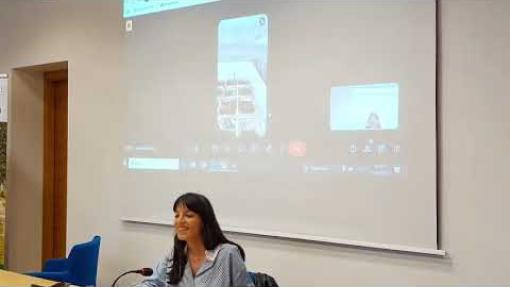
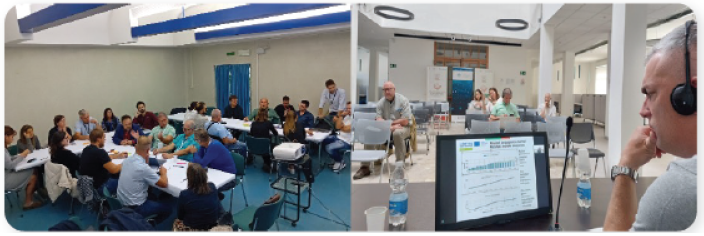
Aquaponics in recirculating systems is a relatively new production method, still little known not only to consumers but also to potential operators and investors. Moreover, although the number of studies and projects is increasing, the design and management of production-scale systems is not yet standardized. These factors have so far limited the creation of companies capable of ensuring significant production volumes within the programme area and across the entire Italian and Slovenian territory. A further obstacle to investment is the current low recognition of aquaponic products, which makes it more difficult to highlight their quality and justify a higher price compared to similar products produced using traditional methods. The development of aquaponics, in addition to technological progress, therefore also requires raising awareness among the different actors of the production chain. In both the Bluegrass and BeBlue projects, this issue was addressed by complementing traditional communication and dissemination activities with a set of actions aimed at connecting these actors within a network that enables the exchange of opinions and information and promotes initiatives of common interest. This approach is known as active participation and is essential for the effective and transparent implementation of a project, as well as for the impact it generates by demonstrating the ability to share good practices and technical knowledge. The ability to organize and conduct participatory events allows stakeholders from different backgrounds to engage in topics of common interest, facilitating dialogue and fostering synergies and collaborations.The numerous networking activities made it possible to define a “road map” for the development of aquaponics, outlining the path for the advancement of this agri-food production sector.
Main networking and participatory events:
- Plenary Forum on the Level of Knowledge about Aquaponics – Mestre, 1 February 2024
- World Café on Parameters and Digitalization for Aquaponics Monitoring – Mestre, 1 February 2024
- AQUAFARM – 14–15 February 2024
- NOVELFARM – 20–21 March 2024
- Project Launch Event in Ljubljana – 9 April 2024
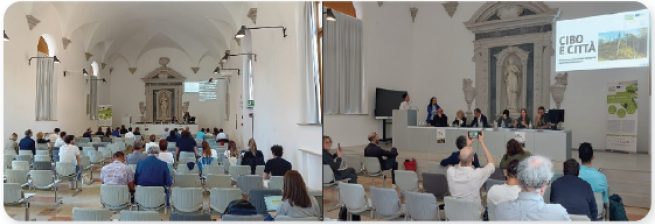
- Food and the City (CIBO E CITTÀ) – IUAV – 10 May 2024
- Technical Workshop for the Large-Scale Retail Sector (GDO) – 12 September 2024
- Working Group: Aquaponics One Year Later – 26 September 2024
- Aquaponic Day – Venice – 16 October 2024
- Aquaponic Day – Ljubljana – 16 October 2024
- Workshop for SAMAC Students, University of Trieste – 15 November 2024
- Working Group: Consumers – Ljubljana, 15 January 2025
- AQUAFARM & NOVELFARM – 12–13 February 2025
- Working Group: Producers – Venice, 4 April 2025
- Komenda Fair – 11–12 April 2025
- Working Group: Investors – Portogruaro, 14 May 2025
- Final Plenary Forum for Producers and Consumers – Trieste, 27 May 2025
- Final Plenary Forum for Producers and Consumers – Koper, 12 June 2025
- Final Project Event – Venice, 2 July 2025
| See the details here D3.1.1 |
| See the details here |
| See the details here |
| See the details here |