CrossCare 2.0
Policy objective: ISO 1 - A better cooperation governance
Typology: capitalization project
The CrossCare 2.0 project aimed to develop an adequate response to the phenomenon of population aging, a common challenge for the Program Area that will have a significant impact on healthcare and social inclusion policies in the medium term.

- The overall objective was to strengthen cooperation and governance in public-private decision-making processes involving institutions and key actors of social and healthcare services for the senior population in the Programme Area.
- By capitalising on and strengthening the CrossCare® Model, the project developed shared strategies to address the common challenge of population ageing and improved the coordination of existing services in the cross-border area.
- The innovative approach of the project involved the pilot implementation of cross-border Community Agreements at the local level, which supported a model of integrated and personalized care for the elderly and their families, in synergy between public and private services and thanks to collaboration with civil society and all formal and informal organizations active in the area.

- The skills of project partners, public administrations and sector operators have been strengthened, who have actively participated in joint training courses on Crosscare® methods and approaches.
- A total of 244 people participated in training sessions and 147 in local workshops.
- The Crosscare® Model was consolidated, as was cross-border collaboration through the creation of Community Agreements for an innovative approach to elderly care.
- Joint Guidelines for drafting Community Agreements were published, and five Community Agreements were signed by a total of 53 entities, including public bodies, associations, and third-sector organizations.
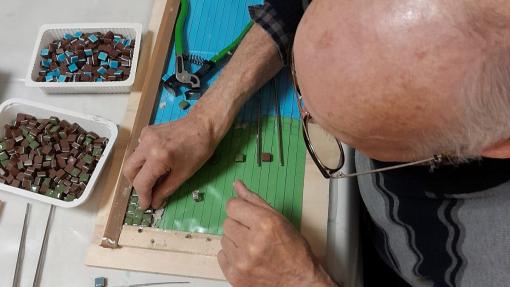
- Active aging services improved thanks to the implementation of community strategies with the CrossCare 2.0 Model pilot with at least 50 users.
- Among the most innovative aspects of the pilot experience were the Neuro-Cognitive Motion Protocol, innovative assessment methods such as the Therapeutic Polar-Arc Scheme, the Validation and Gentlecare Methods, the Transcendental Meditation technique, and the professional role of the Care Manager.

COURSES
Between March and June 2024, six training courses were organised for staff from the Italian and Slovenian partners involved in piloting the CrossCare model.
The aim was to strengthen skills, improve the quality of care for older people and promote shared methodologies across services in the cross-border area.
A total of 391 practitioners took part, including both the main courses (244) and the related in-depth workshops (147).
The course topics were:
Therapeutic Arc and Polar Scheme – 43 participants. Training on the use of the Therapeutic Arc (therapeutic/care pathway) and the Polar Scheme (an advanced method for the integrated assessment of needs, particularly in geriatric, rehabilitation or mental health contexts).
Validation® – 43 participants. A method used in working with older people, particularly those with dementia. Participants learnt useful techniques for connecting with people with dementia, understanding their feelings and behaviours, and supporting them in expressing their needs. The course was supplemented by four in-depth workshops.
Gentlecare® Model – 41 participants. A holistic approach to caring for people with dementia that involves adapting the environment, activities and communication methods. Four in-depth workshops were also included.
Community Worker and Care Manager – 24 participants. The course explored the role of the Community Worker in coordinating services, families and the local community. Three follow-up workshops were held.
Neuro-Motor-Cognitive Protocol – 44 participants. The training covered the relationship between physical maintenance and cognitive function in older people, with practical exercises and guidance for daily use in care settings.
Dementia – 49 participants. The course provided an overview of the different forms of dementia, communication techniques, assessment tools and support strategies for carers.
Summary:
6 main training courses
20 days in total (including workshops)
Over 390 participants in total
Professionals involved: educators, care assistants, nurses, physiotherapists, psychologists, service coordinators
Common objective: to strengthen shared skills and methods to improve the care of older people in the Italy–Slovenia cross-border context.


CROSSCARE® MODEL GUIDELINES
The Cross-border Guidelines of the CrossCare® Model were drawn up, as part of the CrossCare 2.0 project, by the project partners: Cooperativa sociale Itaca, Azienda Pubblica di Servizi alla Persona ITIS, IPAB Residenza per Anziani Giuseppe Francescon, DEOS, celostna oskrba starostnikov, d.o.o., Dom starejših občanov Grosuplje, and Azienda Speciale Don Moschetta.
The CrossCare® Model Guidelines represent the project’s strategic document; they define a holistic, person-centred approach aimed at improving the quality of life of older people and promoting active and dignified ageing.
The tool serves to strengthen the coordination of local services, promote independence and introduce innovative methods (such as Gentlecare and Validation), transforming care into a community commitment through Community Pacts.
The CrossCare® Model Guidelines are aimed at institutions, policy-makers, social and healthcare professionals, third sector organisations and caregivers, offering a sustainable vision to overcome the fragmentation of care provision.
COMMUNITY PACTS
Community Pacts are multidisciplinary network agreements arising from the CrossCare 2.0 project to promote shared management of frailty. They serve as tools for cohesion and networking between public, private and third sector entities, aimed at transforming care into a collective and structured commitment.
Target Audience and Objectives They are aimed at institutions, associations and organisations, providing a legal and operational framework to coordinate solidarity initiatives for elderly people experiencing frailty or vulnerability and their families. The aim is to activate local social networks capable of identifying the needs of the community in a timely manner.
Main Objectives:
Active ageing: To make the most of remaining abilities and promote the social inclusion of older people.
Widespread monitoring: Ensuring home care and constant local support, both formal and informal.
Participatory governance: Formalise partnerships between the public and private sectors through dedicated local steering groups.
Prevention: Countering institutionalisation, encouraging people to remain in their own living environment.
Five Community Pacts were signed, one for each area involved in the project: Sacile and Trieste in Friuli Venezia Giulia, Portogruaro and Caorle in Veneto, and a single pact in Slovenia covering Ljubljana and Grosuplje. Similar in form but tailored to each area, they represent a care model capable of adapting to the specific characteristics of each community.
Fifty-three bodies and organisations across Italy and Slovenia have signed up to the Community Pacts: 19 in Sacile, 16 in Trieste, 10 in Portogruaro, 2 in Caorle, and 6 in Ljubljana and Grosuplje.
Further information and the list of participating organisations: https://www.ita-slo.eu/en/news-and-events/news/community-pacts-unite-veneto-fvg-and-slovenia


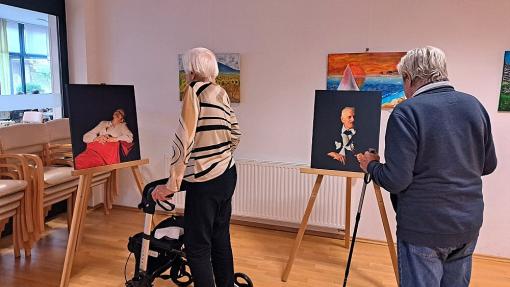
PHOTOGRAPHIC EXHIBITION “CARAVAGGIO – SHADOWS AND LIGHTS”
To bring people closer to the world of older people, seen as individuals possessing dignity, regardless of any physical or cognitive decline.
This was the aim of “Caravaggio: Shadows and Lights”, the cross-border, travelling photography exhibition, which interpreted Caravaggio’s art as a means of restoring the unique and wonderful qualities inherent in every person, regardless of their frailty.
The exhibition travelled between Italy and Slovenia and was hosted at the Ospitale San Gregorio in Sacile from 18 to 22 September 2024, at the Asp Itis headquarters in Trieste from 28 September to 6 October, and in Ljubljana from 7 to 18 October at the DEOS Trnovo Senior Citizens’ Centre and the Črnuče Senior Citizens’ Centre.
https://www.ita-slo.eu/en/news-and-events/news/caravaggio-takes-care-elderly


PRESS CONFERENCES
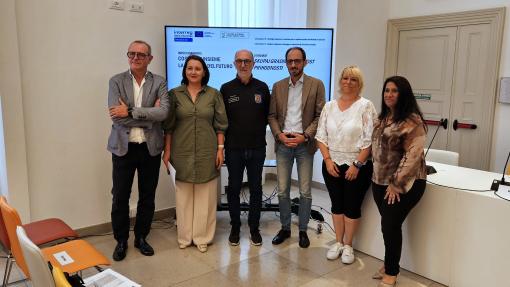
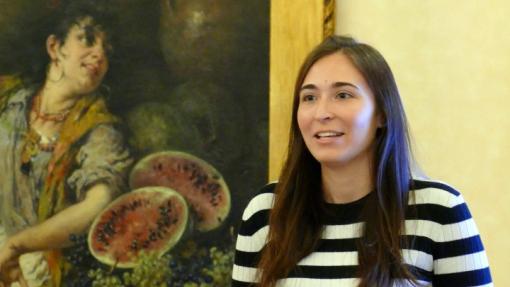
The CrossCare 2.0 project has strengthened the network between Italy and Slovenia through specific institutional communication events, which have become key milestones, one for each region involved.
The three press conferences in Sacile, Ljubljana and Portogruaro marked, and presented to the media, partners and stakeholders, the evolution of the integrated care model, focusing in each instance on the project’s key areas: training, active ageing and Community Pacts.
Sacile (Friuli Venezia Giulia): 7 March 2024 – Palazzo Ragazzoni https://www.ita-slo.eu/en/news-and-events/news/friuli-venezia-giulia-veneto-and-slovenia-face-together-common-challenge
Ljubljana (Slovenia): 30 September 2024 – Cankarjev dom https://www.ita-slo.eu/it/notizie-ed-eventi/eventi/conferenza-stampa-30-settembre-lubiana
Portogruaro (Veneto): 31 January 2025 – Council Chamber of the Town Hall https://www.ita-slo.eu/en/news-and-events/news/community-pacts-unite-veneto-fvg-and-slovenia


BUILDING THE COMMUNITY OF THE FUTURE TOGETHER
The closing event of CrossCare 2.0, held on 12 June 2025 at the Friuli Venezia Giulia Regional Government Building in Trieste, in the presence of partners, institutions from all the regions involved and the Joint Secretariat-Managing Authority of the Interreg Italy-Slovenia Programme 2021-2027, crystallised the success of a cross-border model between Friuli Venezia Giulia, Slovenia and Veneto that has reshaped care for the elderly.
The project has transformed care into a collective endeavour and overcome the fragmentation of services thanks to the Community Pacts, signed by 53 public and private organisations.
The project’s significance lies in its holistic and personalised approach, which places the individual and their family at the centre of a network coordinated by the Care Manager, a key figure in ensuring continuity of care.
Innovations such as the introduction of the Care Manager, who coordinated the care pathway and ensured support tailored to each individual’s needs, the Community Pacts – local agreements that have successfully involved a wide range of stakeholders to build a support network around older people and promote active ageing – have generated tangible benefits for individuals and families, improving quality of life, promoting independence and combating social isolation.
At the same time, the project has strengthened communities’ capacity to care for their own elderly, creating a more participatory and sustainable welfare model.
Tools such as clinical-cognitive protocols and the Social Concierge scheme have demonstrated how cooperation can generate tangible well-being, promoting active ageing and home-based care.
CrossCare 2.0 leaves behind a structural foundation for future welfare, where local solidarity and shared guidelines ensure dignity and independence for residents, effectively combating social isolation.
https://www.ita-slo.eu/en/news-and-events/news/aging-building-together-community-future