CROSS ALERT
Specific objective: SO 4 - Promoting climate change adaptation and disaster risk prevention, resilience, taking into account eco-system based approaches
Typology: Standard project
The common challenge addressed by the CROSS ALERT project was to strengthen capacities for disaster risk prevention and reduce vulnerability caused by climate change, which highlighted the need for more coordinated responses to natural disasters in the programme area.
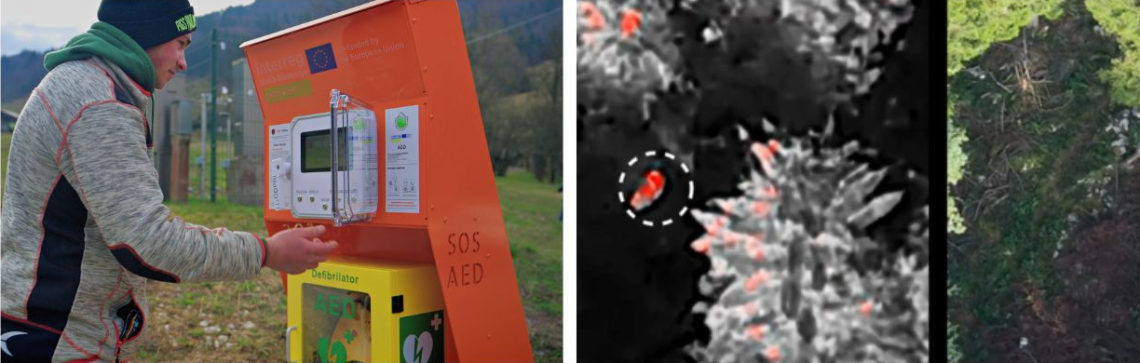
The project introduced two key innovations: the establishment of a first responders’ system with SOS points in the border area and the development of digital tools to support natural disaster management, damage limitation and recovery activities. The first responders’ system, which is already well established in Slovenia, was transferred to Italian partners as a good practice example through the pilot establishment of an SOS point along the Slovenian-Italian border. The developed digital tools included a hazard warning map, a system for detecting the extent of disasters through remote sensing, an automated disaster recovery monitoring system, and a software solution for civil protection volunteer management in Veneto, enabling communication with similar systems in Friuli Venezia Giulia and Slovenia.
Through the preparation of joint strategies, action plans and digital solutions, the CROSS ALERT project improved preventive measures and natural disaster management in the cross-border area of Italy and Slovenia. Existing systems and measures for disaster prevention were analysed, an overview of the impacts of fires and floods was prepared, and tools for monitoring vulnerable areas and supporting recovery processes were developed. The developed solutions were successfully tested through pilot activities, presented during training workshops and validated through joint cross-border exercises involving civil protection and rescue units as well as other key stakeholders. The project confirmed that effective natural disaster management requires close cross-border cooperation, as natural disasters do not recognise national borders.
The overall objective of the project was to strengthen capacities for climate change resilience and reduce risks related to natural disasters through the development of joint tools and action plans aimed at establishing preventive measures and monitoring mechanisms for preventing and mitigating the consequences of natural disasters in the ITA-SLO cross-border area.
The main direct impacts of the project were the development of joint action plans for natural disaster prevention and support in the recovery of disaster consequences, the implementation of pilot measures to improve the response capacity of rescue units, and strengthened cross-border cooperation among organisations active in the field of civil protection and rescue.
Output 1.1 Cross-border action plan for the prevention of natural disasters and support for recovery from their consequences
This document brings together the results and technical foundations developed as part of the CROSS ALERT project and other Interreg programme projects. Based on the local and regional action plans drawn up during the project’s implementation, it establishes a common cross-border framework for more effective management of natural disasters and strengthens coordinated cooperation in preparedness for and response to natural disasters.
Output 2.1 Pilot activities to improve the responsiveness of emergency services in the event of natural disasters in the ITA-SLO region
The document presents the implementation of three pilot activities, within which the project-developed tools and approaches were tested with the aim of improving preparedness, response capacity, and cross-border cooperation in addressing natural disasters.
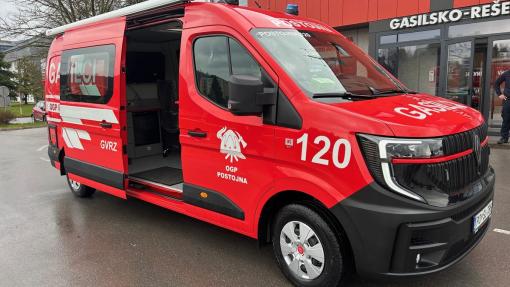
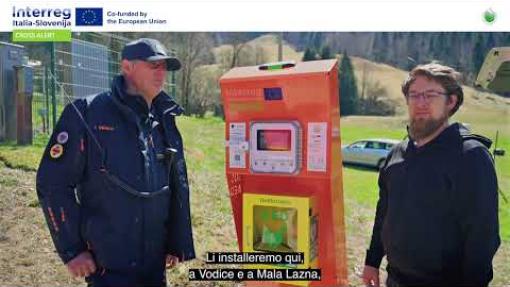
As part of the first pilot activity, the Municipality of Ajdovščina established two SOS points to ensure emergency communication in hard-to-reach areas. Within the second pilot activity, the project partner IGEA carried out a demonstration of the use of an unmanned aerial vehicle equipped with a thermal imaging camera for searching for missing persons. The Metropolitan City of Venice tested the Jarvis digital platform within the third pilot activity to support civil protection teams in the management and coordination of responses to emergency situations.
Stakeholder Awareness-Raising Workshops
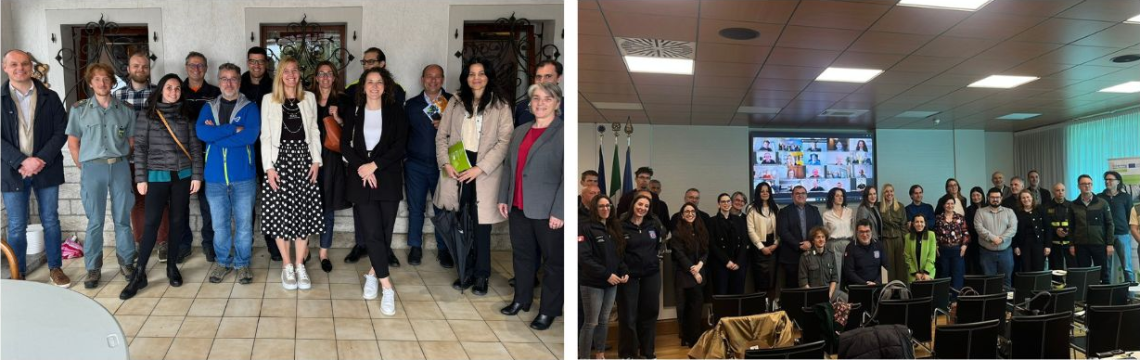
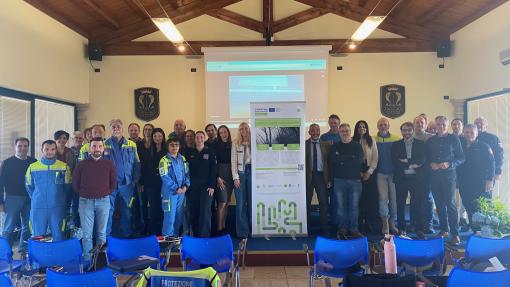
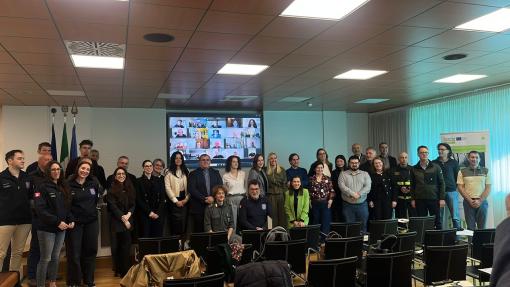
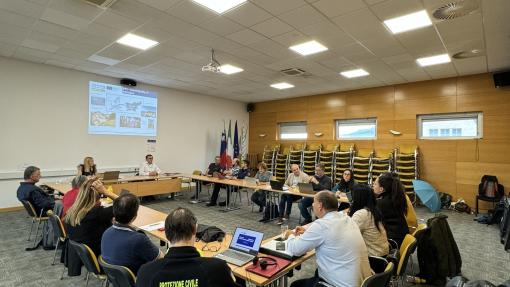
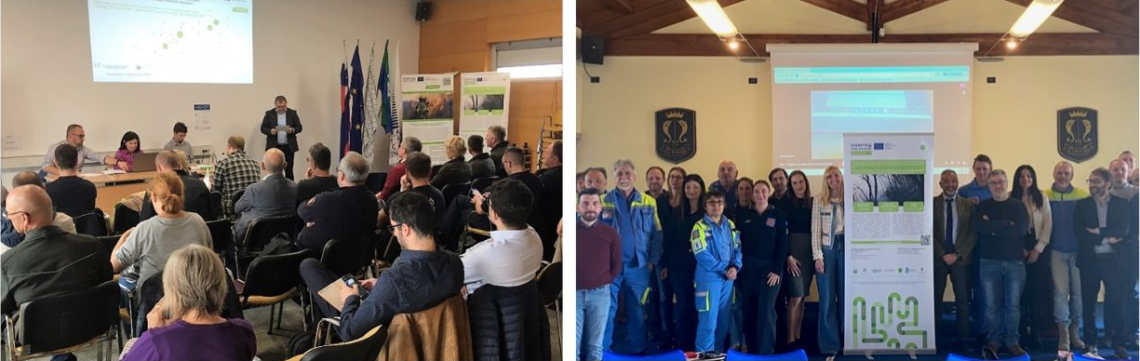
Two cross-border workshops were organised, targeting civil protection unit commanders, firefighters, and decision-makers at the local and regional levels. The workshops, held in Slovenia and Italy, focused on presenting the project results, exchanging knowledge and good practices, and strengthening cross-border cooperation in the prevention and management of natural disasters.
Joint Cross-Border Training for Civil Protection Units and Volunteers
Within the framework of this activity, three professional activities were carried out to strengthen preparedness, coordination, and response to natural disasters in the cross-border area.
The Municipality of Ajdovščina organised a cross-border workshop to present the civil protection and rescue system and facilitate the transfer of good practices to Italian partners. The Metropolitan City of Venice carried out a training session for civil protection volunteers on the use of new tools for natural disaster management.
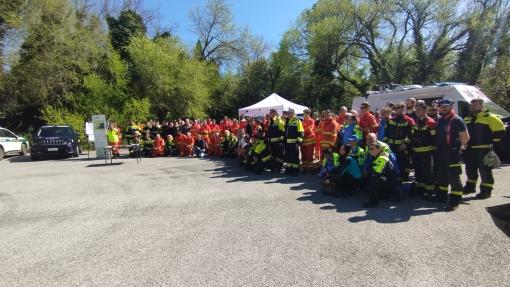
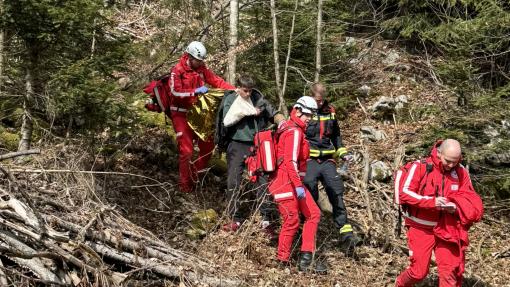
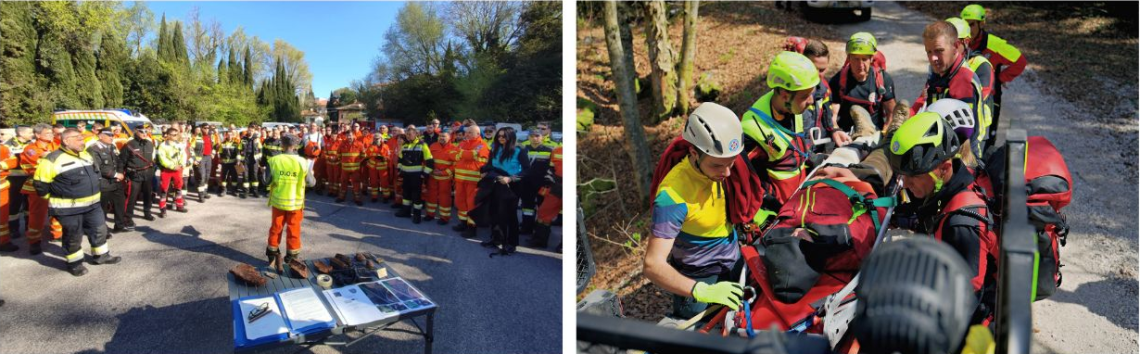
As part of a joint cross-border exercise conducted in Slovenia and Italy, the project-developed tools and equipment purchased within the project were tested in practice.
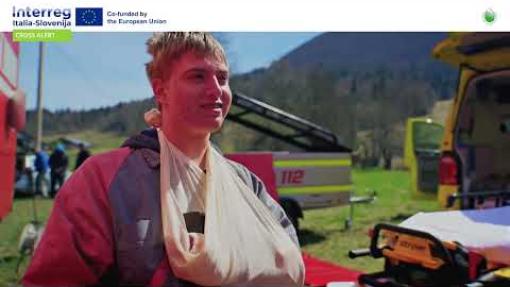
Within this activity, a video recording of the Slovenian exercise was also prepared, showcasing the implementation of practical activities and the testing of solutions developed within the project. The video is available at link.
Cross-Border Public Awareness-Raising Event
Communication activities were carried out throughout the entire implementation period with the aim of raising public awareness about preventive measures and appropriate actions in the event of natural disasters, as well as reducing their impacts on residents. The main pillars of awareness-raising activities were the organisation of the kick-off event, the final event, and six local events dedicated to prevention and effective response in the event of disasters.
More information on the implemented communication activities and events is available in the document at the following link.