TRECap
Specific objective: SO 4 - Promoting climate change adaptation and disaster risk prevention, resilience, taking into account eco-system based approaches
Typology: Capitalization project
The National Institute of Oceanography and Experimental Geophysics – OGS coordinated the TRETAMARA project as part of the Interreg V-A Italy–Slovenia Programme 2014–2020, in partnership with the NIB (the Piran Marine Biology Station), the CNR (ISMAR in Venice and IGG in Padua) and Shoreline, which aimed to enhance the biogenic and geogenic heritage of the Northern Adriatic. The analysis of protected area management carried out as part of TRETAMARA highlighted a number of shortcomings, which can be summarised as a lack of coordination and strategies; this has resulted in poor management efficiency, which could be improved by adopting shared objectives, strategies and management tools across the Northern Adriatic.
The challenge of the TRECap project was to initiate this process by sharing a number of actions to serve as examples. Attention was focused on one threat – climate change – which severely undermines our marine environments, and on one species, Pinna nobilis, which is at risk of extinction but still present in the Northern Adriatic, in order to begin developing shared management strategies. All actions were accompanied by communication and training activities which will promote this cross-border vision – even after the project has concluded – and ensure its transferability and sustainability.
Over the 27 months of the project, the Italian-Slovenian partnership expanded the cross-border seabed temperature monitoring network, bringing the total to seven active stations across Friuli Venezia Giulia, Veneto and Slovenia; it carried out high-resolution photogrammetric surveys at four significant marine sites, the ‘trezze’ or ‘tegnùe’ of the Northern Adriatic; finally, it developed the first shared and tested protocol for the collection, rearing and transplantation of Pinna nobilis juveniles, completed in February 2025 with the transplantation of juveniles reared in a controlled environment in the Northern Adriatic, at the Caorle Marine Oasis.
The project also analysed the ecological role of the empty Pinna nobilis shells, which harbour nearly 100 different species of molluscs, confirming their role as biodiversity hotspots even after the animal’s death. All the results have been translated into information materials and educational content, and shared via a dedicated Facebook page and YouTube channel, designed to remain freely available even after the European funding has ended.
Over the course of more than two years of activity, the TRECap project has worked to:
- establish a permanent cross-border network for monitoring climate change in the marine protected areas of the Northern Adriatic;
- develop and test standardised techniques for characterising submerged habitats using high-resolution underwater photogrammetry;
- test a joint Italian-Slovenian protocol for the conservation of Pinna nobilis, ranging from the collection of juveniles to ensure their growth in a controlled environment and subsequent release into the sea to the monitoring of surviving individuals;
- investigate the ecological role of the species following the mass mortality event through the analysis of organisms found on the valves of individuals that had already died;
- produce information and multimedia materials for the general public, schools, tourism operators and the research community;
- strengthen, through these pilot actions, cooperation between protected areas in the Northern Adriatic with a view to shared management of the basin.
Cross-border harmonisation of protected area management
Photogrammetry and characterisation of submerged habitats
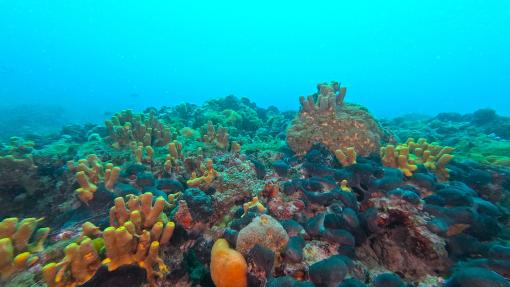
Using the WinGo multi-camera underwater rig, previously developed as part of the TRETAMARA project, very high-resolution photogrammetric surveys were carried out at four pilot sites: the Tegnùe of Porto Falconera in Caorle, the Muggia-Lazzaretto site, the Debeli Rtič Park and the Piran area. The digital seabed models were used to precisely identify suitable locations for the transplantation of Pinna nobilis and to document the conservation status of the ‘trezze’ or ‘tegnùe’, rocky outcrops typical of the Northern Adriatic.

Cross-border seabed temperature monitoring network
To monitor climate change, the project has expanded the cross-border network of seabed temperature sensors, exceeding the minimum target of four new stations. There are now seven active monitoring points, some with data series collected continuously for over two years: at Sant’Agata (Gulf of Trieste), in the Caorle Marine Oasis and at five points along the Slovenian coast (Rt Ronek, Mesečev zaliv, Debeli Rtič, MBP Piran-Fornače, Fijesa). The data collected – with temperatures ranging from 8.7°C in winter to over 30°C in summer at the deepest points – show significant differences between coastal sites near the surface and deeper sites, confirming the value of protected areas as ‘sentinels’ for marine heatwaves.

YouTube channel, documentary and new 3D seabed models
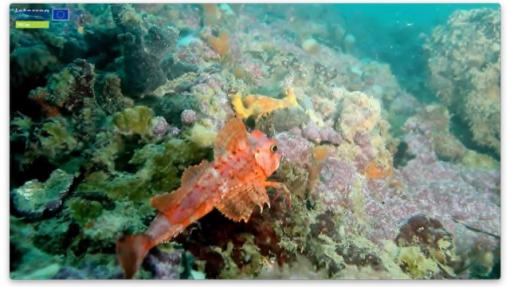
To make the submerged habitats of the ‘trezze’ or ‘tegnùe’ – normally inaccessible to anyone who isn’t a diver – accessible to the general public, TRECap has shared the material collected in the field via a dedicated YouTube channel and a Facebook page. Thanks to footage filmed on the ‘trezze’, 3D virtual tours, a trilingual educational documentary and new three-dimensional digital models of the seabed, the social media channels have achieved over 100,000 total views and a Facebook reach of more than 100,000 people, with coverage also appearing in national newspapers such as *Il Sole 24 Ore* and *La Repubblica*.
Towards permanent governance: the policy brief
The project concludes with an operational proposal to ensure the monitoring network remains in place beyond the funding period through the signing of a Memorandum of Understanding between the partners, the establishment of a permanent technical-policy coordination committee, and the integration of the data collected into the Management Plans for the Natura 2000 sites, in conjunction with the European research infrastructures eLTER and EMODnet.
Cross-border pilot actions for the conservation of Pinna nobilis
Larval collection and transplantation
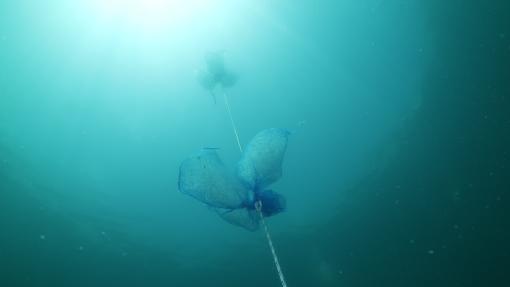
Over three breeding seasons (2023–2025), larval collectors were deployed in the waters of Veneto, Friuli Venezia Giulia, Slovenia and Croatia, with four different types tested and compared amongst the partners, alongside Croatian institutions participating voluntarily in the trial. This networking initiative, which also involved Croatian institutions, led to collaboration between the project and other initiatives (e.g. LIFE Pinna, LIFEPINNARCA) and consolidated a working group which, although not formally institutionalised, continued its work installing larval collectors into 2026.
The 2023 season led to the discovery of a natural recruitment event in Caorle of Pinna nobilis — the first recorded since the mortality crisis of 2019–2020 — whilst the subsequent seasons demonstrated just how fragile and unpredictable the species’ recovery still is. The juveniles collected were grown in a controlled environment and, in February 2025, three specimens were transplanted to the Tegnùe of Porto Falconera in Caorle.


Post-transplant monitoring and protection
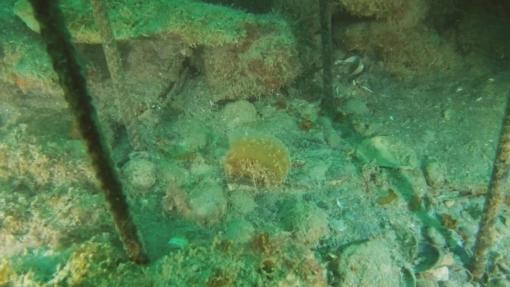
Following the transplant, metal structures were installed to protect the three specimens. The TRECap team periodically monitored the health of the three transplanted Pinna nobilis specimens through regular scientific dives, supplemented by new photogrammetric surveys. The process was not without its difficulties, but one of the transplanted specimens showed steady shell growth, to the extent that the protective cage could be removed after one year: further field validation in the Northern Adriatic basin of the entire protocol developed by the project.

“Best practices”: training modules for the handling and rearing of juveniles
An illustrated guide to best practice — “Handling, collecting and growing juveniles of Pinna nobilis” — has been produced, bringing together all stages of the protocol in a single document: larval collection, transport, controlled growth in the laboratory, selection of the transplantation site, seabed implantation technique and genetic monitoring. The material, also available in new VR content, is designed to be replicated in other protected areas of the Northern Adriatic.
Initial genetic analyses on population connectivity
Genomic sequencing (Genotyping-by-Sequencing) has been initiated on six specimens of Pinna nobilis, two from the Gulf of Trieste and four from the Marche region as a control population. The quality control phase and alignment with the reference genome have been completed: the samples from the Gulf of Trieste yielded the best sequencing results, laying the foundations for the next phase of analysing connectivity between populations, which will help identify larval sites requiring priority protection.
The ecological role of Pinna nobilis shells
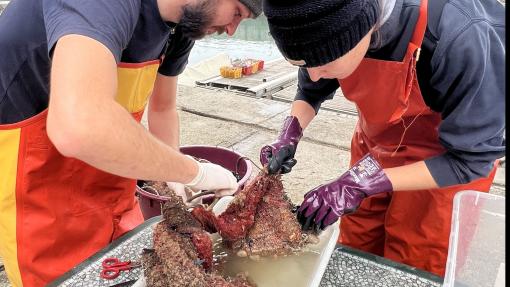
Analysis of the fauna associated with empty Pinna nobilis shells throughout the Northern Adriatic has recorded nearly 100 species of molluscs belonging to 40 different families, with epibiont coverage often exceeding 95 per cent of the available surface area. Even after the animal’s death, the shell continues to function as a refuge and as a hard substrate essential for local biodiversity.
Strategies for the future: the policy briefs
The project concludes with two operational proposals for the partnership and for decision-makers: a joint cross-border strategy for the management of priority species and habitats, which sets out the next steps regarding larval recruitment, genotyping and the protection of ecological corridors; and a shared, standardised four-stage procedure — collection, rearing, site selection, transplantation and monitoring — ready to be applied in other protected areas of the Northern Adriatic.
TRECap in figures
- 7 climate monitoring stations
- 4 sites surveyed using 3D photogrammetry
- 3 Pinna nobilis specimens transplanted to Caorle
- ~100 species recorded on the empty valves
- 35+ videos published
- 100,000+ views
- 100,000+ people reached on Facebook