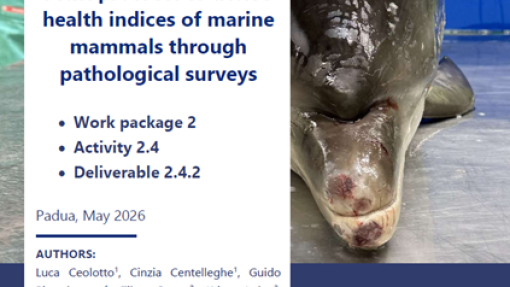
As part of the SEAINSIGHTS project, the deliverable dedicated to the development of a joint protocol for deriving marine mammal health indicators through standardized pathological investigations has been completed. The document represents an important step forward in harmonizing cetacean monitoring and necropsy activities between Italy and Slovenia, strengthening cross-border cooperation in the protection of the Adriatic ecosystem.
Marine mammals are considered true “sentinel species”, capable of reflecting the health status of the marine environment and the effects of anthropogenic pressures such as pollution, maritime traffic, fisheries, and climate change. In this context, post-mortem investigations of stranded animals represent a fundamental tool for collecting information on the health status of marine populations and identifying possible emerging threats.
The protocol developed within SEAINSIGHTS is based on the ACCOBAMS/ASCOBANS guidelines, the main international references for cetacean necropsies, and introduces standardized operational forms designed to facilitate the homogeneous collection of data and biological samples even under difficult logistical conditions. The forms allow the recording of information related to carcass preservation status, pathological findings, biometric parameters, possible anthropogenic interactions, and samples collected for subsequent laboratory analyses.
One of the most innovative aspects of the deliverable concerns the definition of health indicators based on data collected from strandings. Through the integration of pathological, microbiological, toxicological, and ecological information, the protocol makes it possible to transform necropsy data into useful tools for evaluating the pressures affecting cetacean populations in the Northern Adriatic Sea.
The document also highlights how the use of harmonized methodologies is essential to improve data quality, ensure reliable comparisons between different geographic areas, and support European marine biodiversity conservation strategies. In a complex transboundary area such as the Northern Adriatic, the adoption of shared protocols represents a key element for building increasingly effective and coordinated monitoring systems.
Please find the full report HERE.