Olive leaves are a by-product of olive growing that often remains unused. However, research shows that they can have significant practical value.
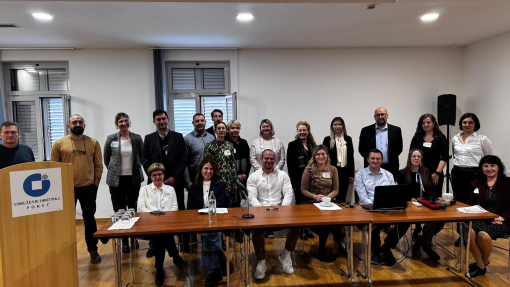
On 14 November 2025, researchers from the Institute for Oliviculture ZRS Koper participated in the VII. International Scientific-Professional Conference Innovation and Agribusiness – Mediterranean Agriculture and Agrotourism in Poreč, organised by the Croatian Agro-Economic Society (HAED). As part of the scientific programme, a contribution on the potential of olive leaf extracts as a source of antimicrobial innovations was presented. The work was prepared through collaboration between the Institute for Oliviculture and the company Microbium within the BioTech2Agri project (Interreg VI-A Italy–Slovenia 2021–2027).
The results of laboratory analyses confirm that ethanolic extracts of leaves from the Istrska belica variety effectively inhibit the growth of several microorganisms of safety relevance: Pseudomonas aeruginosa, Staphylococcus aureus, Candida albicans, and Escherichia coli. These findings point to a broad spectrum of activity of biophenols, particularly oleuropein, and open up opportunities for applications in cosmetics, nutraceuticals, and the agri-food sector.
By using leaf biomass and through cooperation with processors, researchers, and companies, even what was considered waste only yesterday can become part of a new, sustainable economy. It is precisely such pathways that will determine how resilient olive growing will be in a changing world.