By the end of 2025, the project BioTiles: Safeguarding and Enhancing the Resilience of Lagoon Ecosystems to Climate Change organised two training days dedicated to the collection, management and standardisation of biodiversity data. The same training was held in two different locations—Trieste and Koper—to enable researchers, technicians and professionals from both countries to take part in the capacity-building activities and jointly contribute to the development of the future lagoon HUB envisaged by the project.
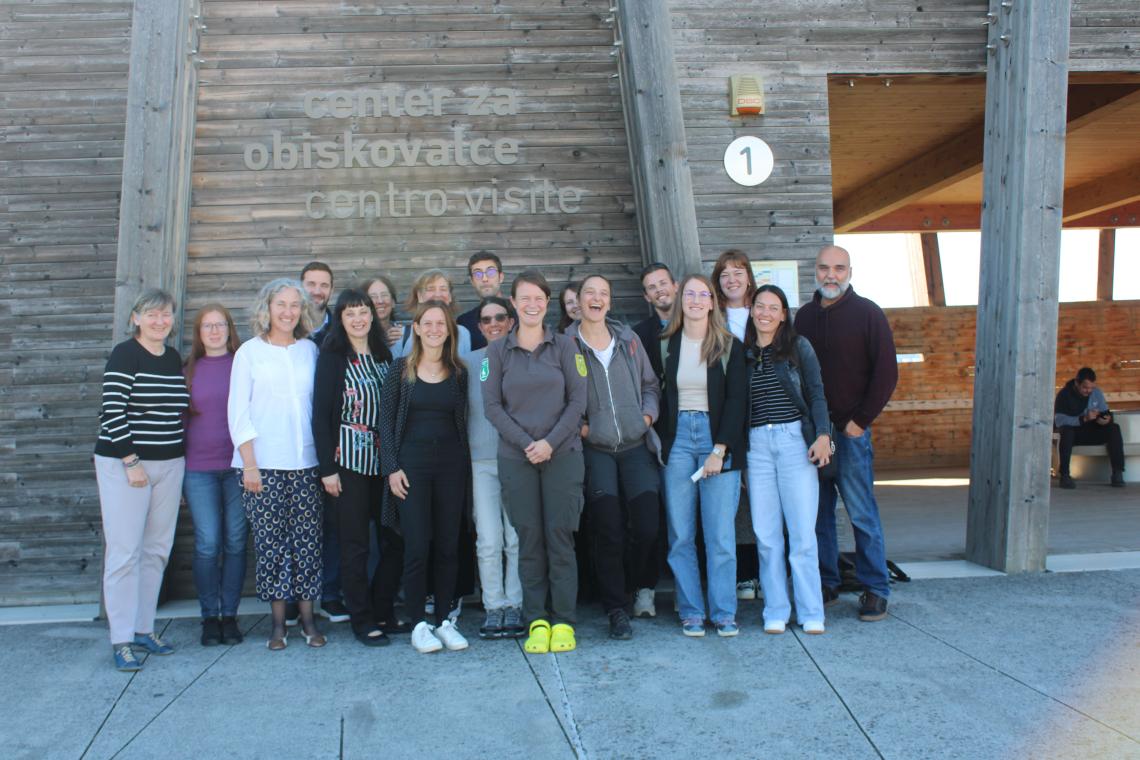
The Koper session took place on 10 October at the Visitor Centre of the Val Stagnon Nature Reserve, while the Trieste training followed the same structure, content and objectives on 21 November 2025 at the headquarters of the National Institute of Oceanography and Applied Geophysics (OGS).
The idea behind the initiative is simple yet essential: the lagoons of the Northern Adriatic are transboundary, complex and vulnerable ecosystems, and their protection requires a shared vision and harmonised working tools. Both training days addressed the need to centralise knowledge that is currently scattered across different institutions and to build a shared platform capable of interfacing directly with EMODnet Biology, the European reference infrastructure for marine biodiversity data. As illustrated in the training materials, the creation of the Lagoon Biodiversity HUB represents one of the key milestones of BioTiles, as it will help reduce data fragmentation, improve data quality and facilitate dissemination at the European level.
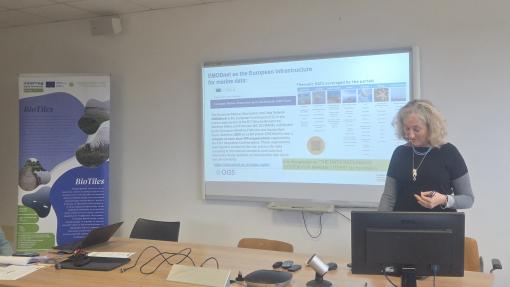
In both locations, the day opened with a presentation by Dr Marina Lipizer, who introduced the concept of Open Science and its role in addressing contemporary social and environmental challenges. As highlighted during the training, Open Science is a priority for the European Commission, which encourages the early sharing of research results and requires data produced by funded projects to be made available in the most accessible way possible. This approach promotes transparency, strengthens trust in scientific research and enables faster dissemination of knowledge—crucial elements in tackling issues such as biodiversity loss in lagoon environments.
This was followed by an intervention by Dr Nikola Holodkov, who guided participants through the principles of biodiversity data management and the guidelines needed to transform raw datasets into coherent and reusable information. The session explained how metadata quality, clarity of data licences and the adoption of international vocabularies and standards are essential to ensure that data become FAIR—that is, Findable, Accessible, Interoperable and Reusable. As emphasised during the presentation, data do not “become FAIR by magic”, but require care, clear procedures and a shared culture of data management.
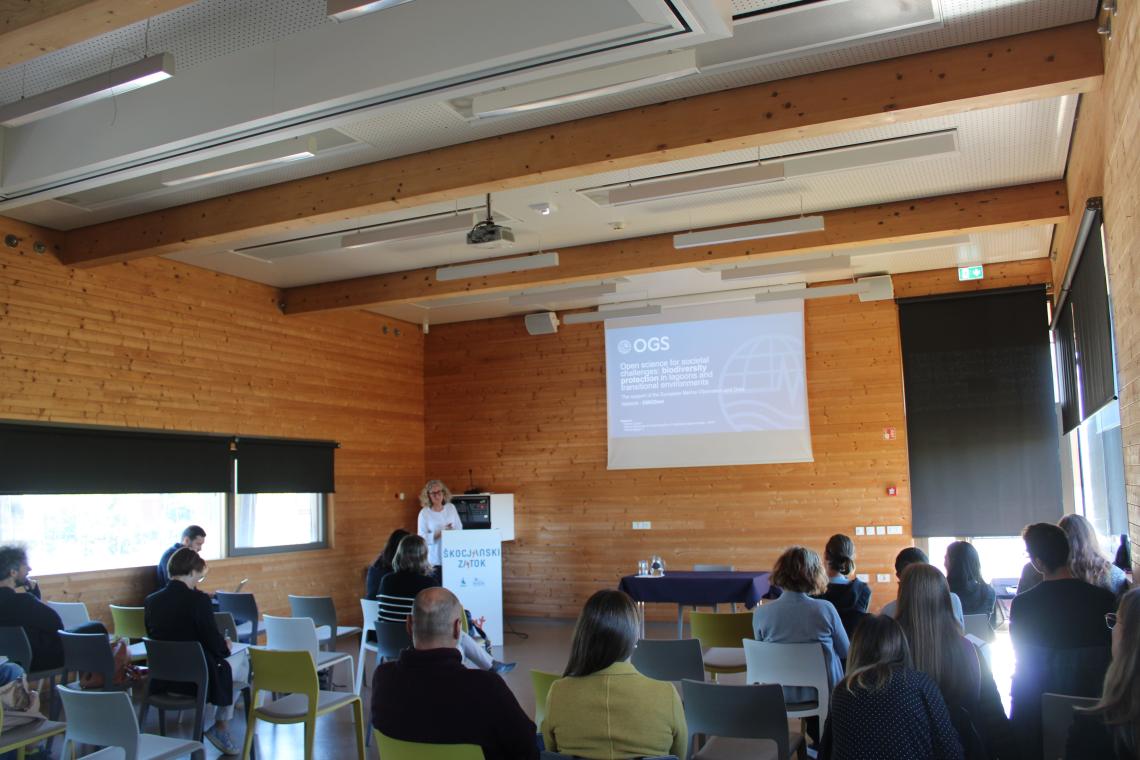
During both training days, significant attention was also given to the presentation of the BioTiles Memorandum of Understanding (MoU), introduced by Dr Lipizer. The MoU is a cornerstone of the project, as it defines the partners’ commitments to data sharing, the adoption of common standards and the collaborative construction of the lagoon HUB. Beyond its formal value, the agreement helps foster a stable climate of cooperation and alignment with European infrastructures, including EMODnet.
EMODnet itself was explored in the training materials as an example of an infrastructure capable of collecting, harmonising and making large volumes of data available, thereby directly supporting European policies on biodiversity and marine environments.
Both sessions concluded with open discussions, during which participants from diverse backgrounds shared experiences, questions and operational needs. These exchanges confirmed the importance of the path undertaken: building a truly effective lagoon HUB requires the active participation of all involved institutions, each contributing their datasets, expertise and willingness to be part of a broader shared vision.
Looking ahead, BioTiles will now proceed with the collection of available data inventories, the harmonisation of metadata, the assignment of DOIs and the progressive integration of datasets into the EMODnet system. The two training days therefore represented not only learning opportunities, but also a strategic step towards the creation of an open, collaborative, transboundary infrastructure aligned with European standards.
The dual edition of the training, held in Trieste and Koper, highlighted the project’s commitment to fostering genuine cooperation between Italy and Slovenia and to laying solid foundations for the shared management of lagoon ecosystems. In this sense, BioTiles is not only collecting data, but also building a more cohesive, aware and resilience-oriented scientific community.