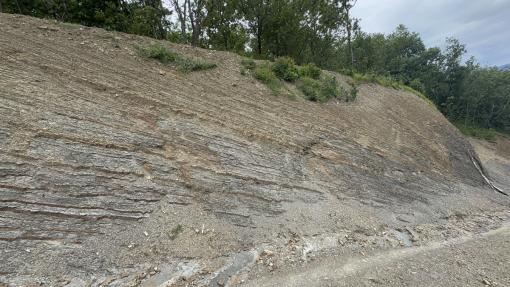
As part of the cross-border Ero-STOP project, document D.1.5.1 was developed. This document provides technical foundations for improving legislation on land-use planning, soil protection, and the implementation of complex agricultural improvement interventions in Slovenia and Italy, complementing the previous analysis of regulatory frameworks (D.1.2.1).
The analysis conducted in both countries highlighted that agricultural soil erosion is not addressed systematically and uniformly. Both Slovenia and Italy lack clear technical guidelines for the design, implementation, and maintenance of agricultural improvement interventions, a uniform methodology for assessing erosion risk, and effective monitoring of intervention implementation in the field. Erosion is often addressed indirectly through regulations on water, construction, or hydrogeological risks, rather than as a separate agricultural land protection issue.
For the Slovenian context, the document specifically emphasizes the need for a mandatory and clearly defined technical basis in the form of a geological-geotechnical report, which should become a central tool in the planning of complex agricultural improvement interventions. It also proposes renaming it, in a more accessible and user-friendly way, as the "Soil Protection Plan." It also suggests introducing inspections during construction, requiring supervisory authorities to be informed at the start of construction, and establishing a more effective link between technical basis, ministerial decisions, and inspections. A significant portion of the recommendations also concerns municipal urban planning acts, which should consistently apply the technical basis in areas prone to erosion, requiring the design of terraces and drainage systems consistent with the natural morphology of the terrain.
In the Italian context, the document primarily highlights the fragmentation and complexity of the regulatory framework and the lack of a unified regulation of agricultural soil erosion. As key solutions, the document emphasizes the increased importance of preventive land-use planning, especially at the basin level, and the need to develop detailed soil vulnerability maps for municipal planning. Recommendations include linking existing tools (basin plans, PAI, PGRA, municipal urban planning documents), developing guidelines for good agricultural practices in erosion-sensitive areas, simplifying the maintenance of terraces and dry stone walls, and greater involvement of experts from various fields in planning and control processes.
The document therefore represents a comprehensive technical proposal for updating legislation and land-use planning, aimed at ensuring more coordinated, safe, and sustainable agricultural improvement interventions and improving the protection of agricultural soils from erosion and instability in the cross-border context.
The document, "Preparing the basis for improving legislation," is available at the following link: