The Kras4us UP FAMNIT project partner continues to organize biological evenings as part of the Kras4us project. This is a series of lectures whose main goal is to popularize various biology and nature conservation topics, organized by the staff of the UP FAMNIT Department of Biodiversity. This series is mainly dedicated to topics related to the Kras4us project, which is funded by the Interreg VI-A Italy-Slovenia 2021-2027 program.
The third biological evening of the season took place on January 28. The lecture, entitled "Fire or flight: the link between forest fire dynamics and the ecology of the short-toed snake eagle in the Karst," was presented by conservation ornithologists Domen Stanič and Davide Scridel from the Slovenian Bird Study and Protection Society (DOPPS). Both are renowned and experienced ornithologists. Domen also works in the Škocjanski zatok Nature Reserve, is the editor of the magazine Svet ptic (World of Birds), and is the main person behind the WildSlovenia concept. Davide Scridel's research covers a wide range of habitats (from marine and agricultural landscapes to mountain ecosystems), using innovative approaches such as remote sensing, bioacoustics, and GPS telemetry. They presented the impact of karst fires on bird populations in the area and revealed the winners and losers of these increasingly frequent extreme events.
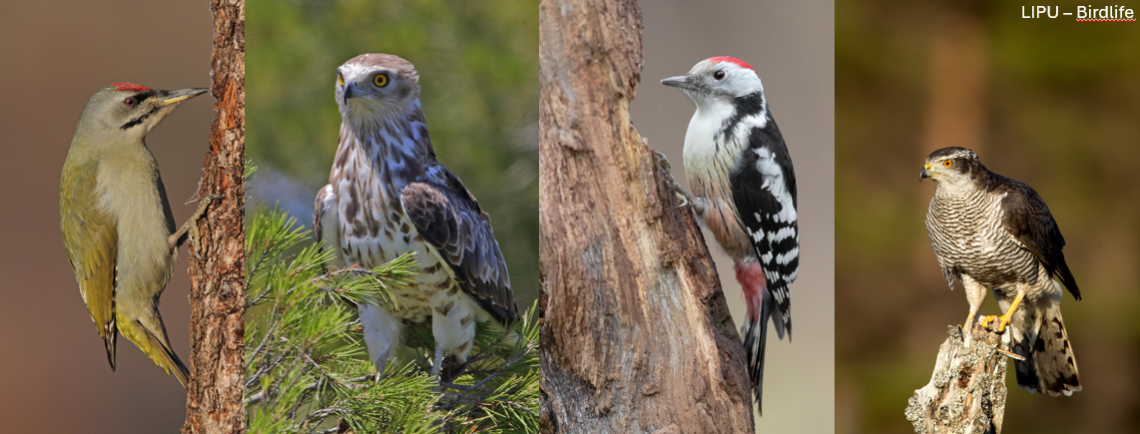
In the second part of the lecture, they focused on the short-toed snake eagle (Circaetus gallicus), which is considered a predator that feeds on snakes, breeds in the Karst, and winters in sub-Saharan Africa. They presented the results of a study in which five specimens of the short-toed snake eagle were equipped with GPS trackers, which enabled detailed monitoring of their migration routes. We learned that short-toed eagles use two main routes (east across the Balkans and west across the Apennine Peninsula) and that the dividing line between them is right in the Karst region. We also learned that individual short-toed eagles follow the same chosen route every year.