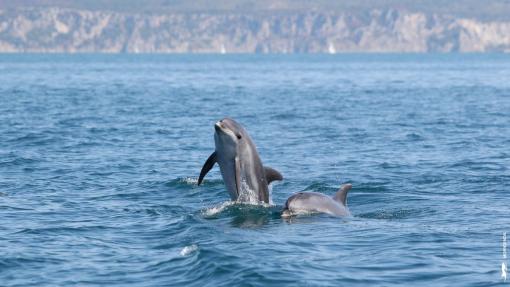
A recent project deliverable presents a novel field-based approach and sampling device designed to improve the collection of environmental DNA (eDNA) from individual bottlenose dolphins (Tursiops truncatus) directly from the water contained within their fluke prints. Because organisms naturally shed genetic material into their surrounding environment, aquatic habitats contain trace DNA that can be sampled non-invasively. In dolphins, the surface-water disturbance and friction generated during a dive create a temporary fluke print that may concentrate higher quantities of dolphin genetic material.
The new method, developed by partners from Morigenos and DivjaLabs, substantially increases the volume of water from which eDNA can be extracted. While traditional eDNA sampling methods typically process between 1 and 10 litres of water, our new method can filter up to 30 litres, significantly improving the probability of recovering dolphin DNA from the environment.
The deliverable includes:
- A detailed description of the sampling device
- Step-by-step instructions on sampling procedures
- The complete sampling protocol
- An assessment of the method’s performance during field testing
These results from the field tests demonstrate that the new method is an effective and highly promising tool for targeted eDNA sampling and individual identification of bottlenose dolphins in the wild.