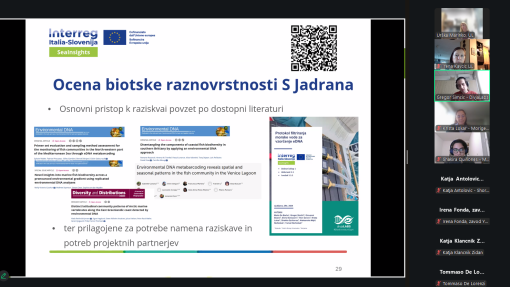
On Friday, 21 November 2025, the SeaInsights project team successfully organized two introductory online meetings with key stakeholders from Slovenia and Friuli Venezia Giulia (FVG). These meetings represent the first step towards co-creating cross-border guidelines for monitoring marine mammals and marine biodiversity using environmental DNA (eDNA) in the Northern Adriatic.
The event was held within the work package Science and Stakeholder Engagement for the Conservation and Management of the Northern Adriatic, which brought together experts, researchers, and representatives of institutions and organizations working in the fields of marine research, conservation, and environmental management. The meeting served as an important foundation for effective, evidence-based and coordinated cross-border monitoring of Northern Adriatic marine ecosystems.
During the meeting organized for the Slovenian audience, Urška Marinko (University of Ljubljana), the project coordinator, opened the event with a presentation of the SeaInsights project and one of its central goals: the development of cross-border guidelines for monitoring marine biodiversity in collaboration with stakeholders. She emphasized that the integration of diverse knowledge and experience is essential for the long-term usefulness of these guidelines and highlighted the vulnerability of the Northern Adriatic ecosystem, which is increasingly exposed to climate change, pollution, and intensive human use.
Krista Lokar (project partner Morigenos) presented current activities and approaches to monitoring marine mammals in the Northern Adriatic. She outlined the importance of long-term monitoring and highlighted the challenges that can be more effectively addressed through closer cross-border cooperation between research and management institutions.
Gregor Simčič (project partner DivjaLabs d.o.o.) presented the use of environmental DNA (eDNA) as a modern approach to monitoring marine biodiversity. He explained that eDNA enables a more accurate and comprehensive understanding of ecosystem status and provides an important complement to traditional monitoring methods.
Katja Antolovič (Shoreline) focused on the role of stakeholders in the project and the importance of participatory processes in developing the guidelines. She presented the planned forms of cooperation and emphasized how incorporating different perspectives contributes to the usefulness and acceptance of the project results.
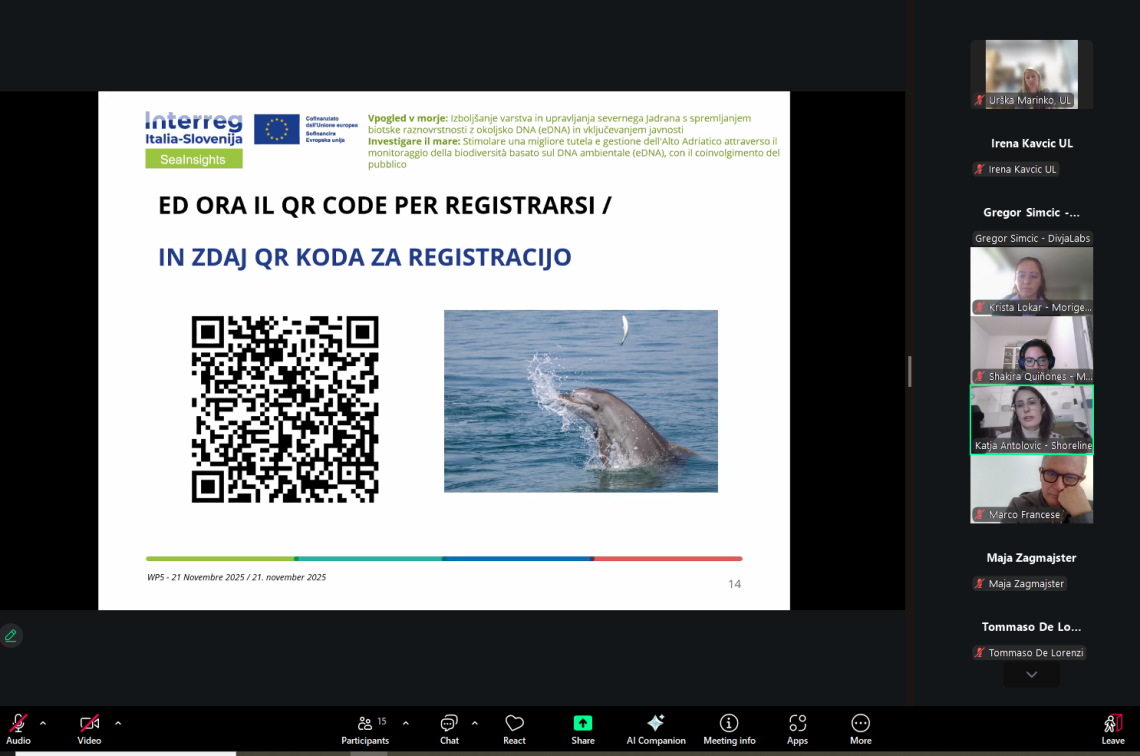
Based on both introductory meetings, the project team together with stakeholders will, in the coming months, begin drafting the cross-border guidelines for monitoring marine mammals and eDNA. These guidelines will be grounded in scientific evidence, field data, and the specific needs of the region.
In 2026, the SeaInsights project will continue with research activities, analysis of collected data, and strengthened engagement with the public in monitoring marine biodiversity in the Northern Adriatic.