
This publication, produced as part of the cross-border Ero-STOP project, is a technical and practical guide for preventing soil erosion on agricultural land, intended for farmers, land managers, consultants, and local communities.
Image
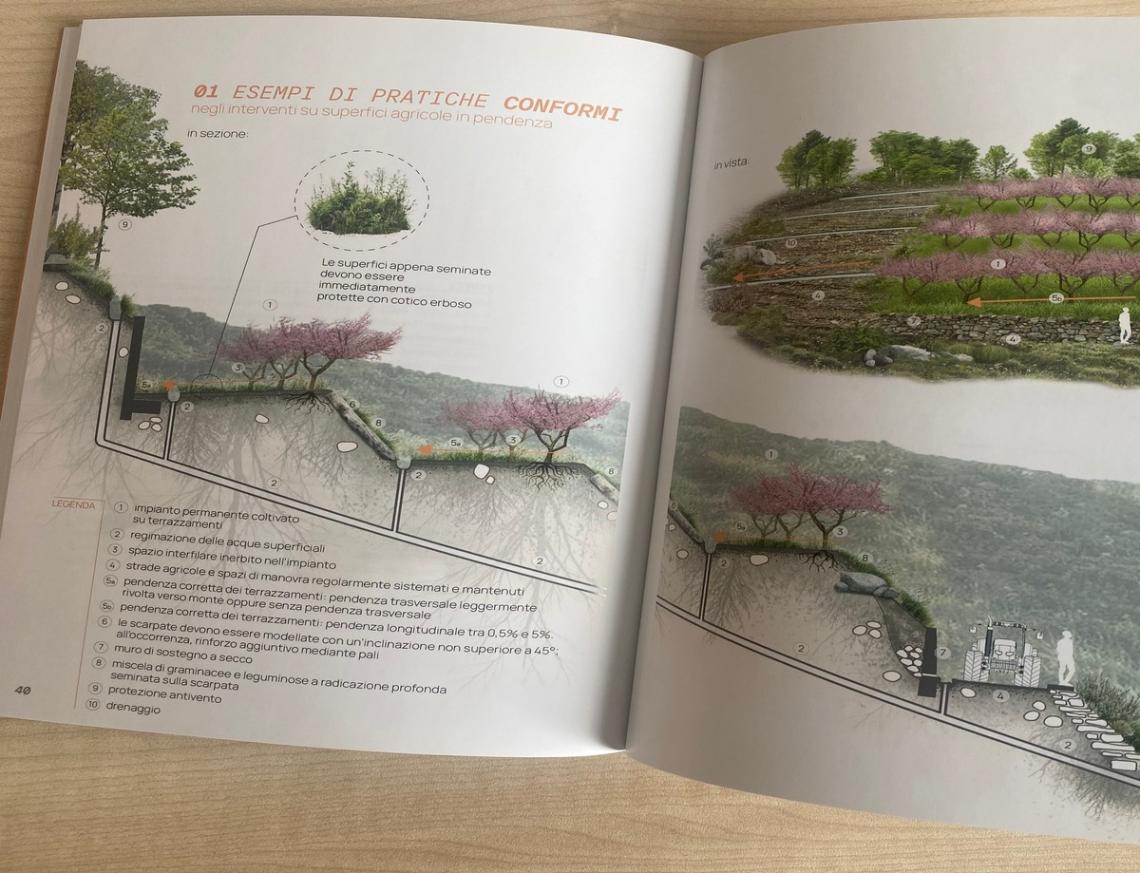
The publication explains clearly and practically:
- what agro-improvements are and how they are implemented,
- how to identify areas at risk of erosion before intervening on the land,
- how to properly design terraces, rural roads, and drainage systems,
- how to stabilize soil long-term through grassing, cover crops, and grass-clover mixtures,
- how to perform interventions on sloping land without causing landslides, soil washout, or damage to slopes,
- which errors in interventions on agricultural land most frequently lead to erosion.
The publication also contains:
- a form for qualitatively assessing erosion potential in the field, useful for assessing risks prior to agro-improvement,
- detailed technical instructions for constructing terraces, drainage systems, and slope consolidation,
- a review of overwintering and non-overwintering cover crops with recommended seeding rates,
- operational recommendations for managing unstable and sloping soils,
- schematic examples of good and bad practices in agricultural land management.
The publication's key message is that erosion prevention results from a combination of proper intervention planning, appropriate technical solutions, and continuous vegetative soil cover. Conscious management of agricultural land helps preserve its long-term fertility, reduce damage caused by extreme weather events, and increase the resilience of the agricultural landscape to climate change.

published on 30. 3. 2026