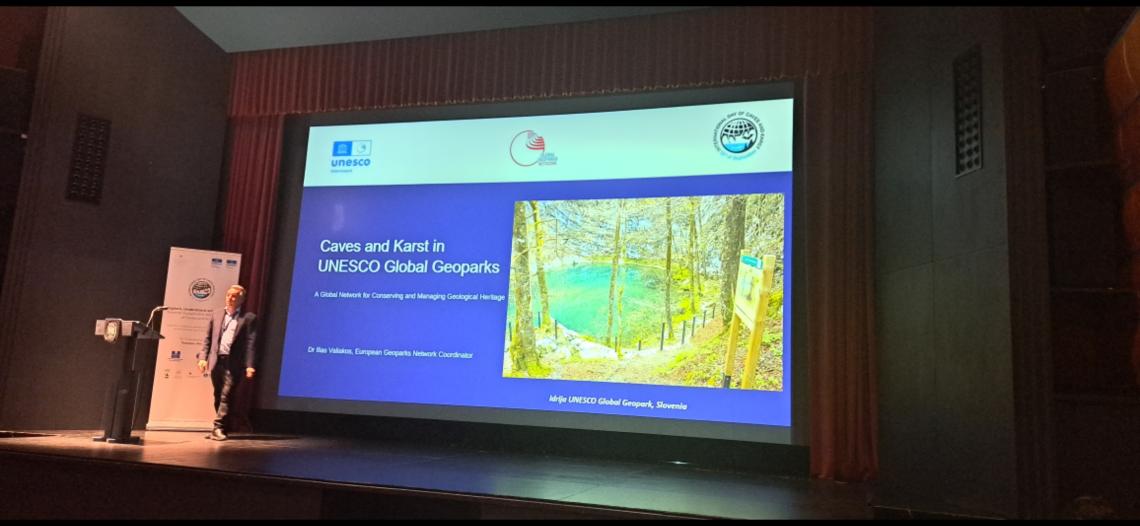
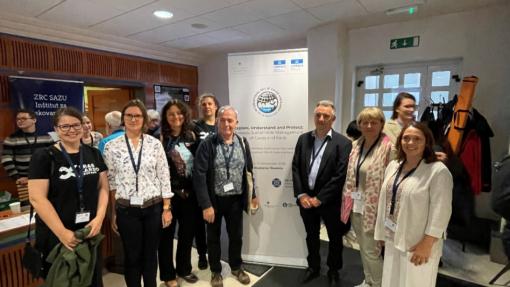
An international scientific conference entitled “Explore, Understand and Protect: Towards Sustainable Management of Caves and Karst” was held in Postojna from 10 to 13 September 2026, marking the first celebration of UNESCO’s International Day of Caves and Karst.
The UNESCO General Conference designated 13 September as the International Day of Caves and Karst to raise awareness of the importance of karst areas and caves, promote their exploration and study, and strengthen efforts to protect them. Karst areas form an important part of the world’s natural and cultural heritage. They provide drinking water for a significant proportion of the global population and serve as habitats for numerous plant and animal species. At the same time, these environments are highly vulnerable to human activities, making their thorough understanding and responsible management particularly important.
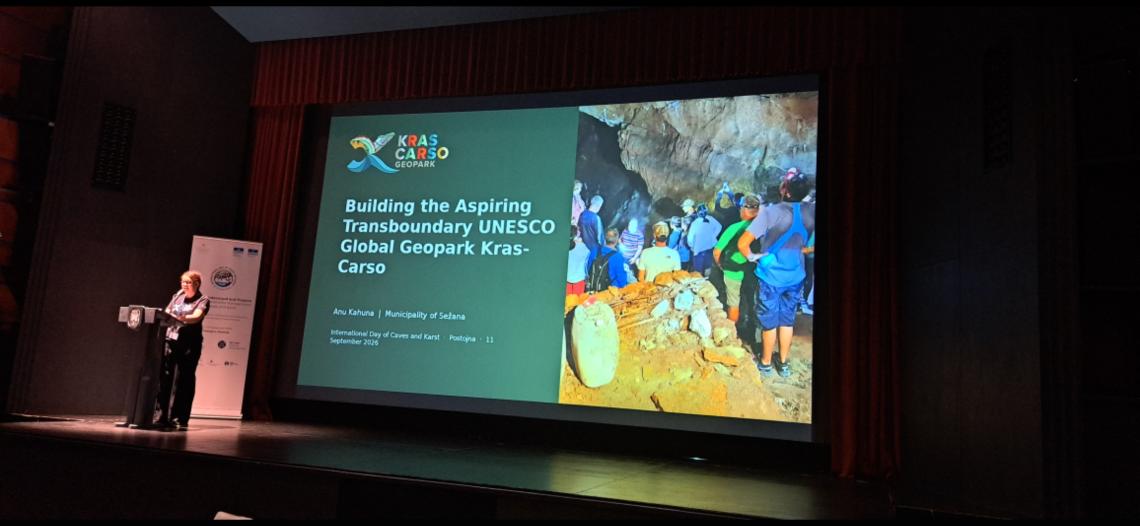
The conference brought together researchers, experts, and representatives of karst regions and geoparks from around the world. Among the contributions presented was one introducing our Geopark Kras–Carso, entitled “Building the Aspiring Transboundary UNESCO Global Geopark Kras–Carso.”
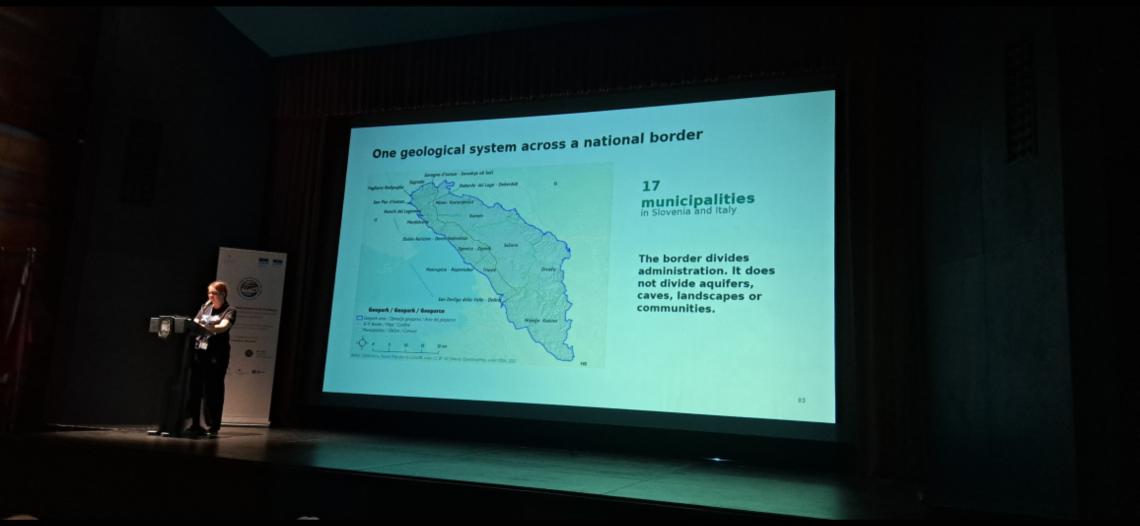
The presentation outlined the process of establishing the transboundary Geopark Kras–Carso, a joint initiative that Slovenian and Italian partners have been developing for more than a decade. Successive cross-border projects have facilitated the development of shared knowledge, strengthened cooperation between scientific and professional institutions and local communities, and gradually laid the foundations for a stable, long-term system of joint management. The presentation also highlighted the ongoing activities of the KRAS–CARSO II project and the efforts to prepare the application for inclusion in the UNESCO Global Geoparks Network.
Particular attention was devoted to the Kras region, which occupies a unique position among the world’s karst landscapes. The international scientific term karst derives from the name of this very region and subsequently became established in scientific terminology, spreading into languages around the world. The Kras region is therefore not simply one of many karst areas, but the landscape from which the world took the name for karst phenomena and where the scientific study of these phenomena has its historical roots.
The international conference provided a valuable opportunity to exchange knowledge and experience and to reconnect with partners and colleagues from other karst regions around the world. Such cooperation demonstrates that the protection of karst heritage transcends national borders and requires collaboration among the scientific community, local communities, educational institutions, and other stakeholders.
Geopark Kras–Carso extends its sincere congratulations to the Karst Research Institute at the Research Centre of the Slovenian Academy of Sciences and Arts (ZRC SAZU) on the successful organisation of the conference. We would also like to thank the Institute for the invitation, its longstanding scientific work, and its continued commitment. Together with the contributions of numerous Slovenian and international partners, these efforts have helped bring about the proclamation of the International Day of Caves and Karst.