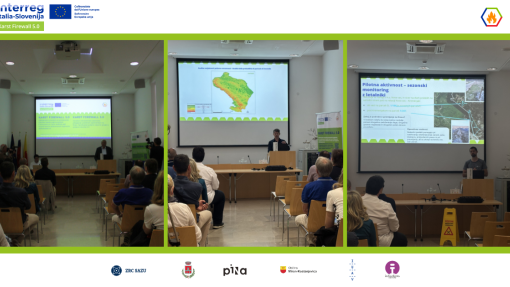
In the symbolic embrace of the Karst landscape, at the Monument of Peace at Cerje near Miren, the final conference of the Karst Firewall 5.0 project took place on 26 May 2026. Experts and local representatives from Slovenia and Italy, under the Interreg VI-A Italy-Slovenia programme, presented the concrete results of years of cross-border collaboration in developing advanced systems for monitoring and early detection of fires in the natural environment.
A digital shield over the Karst landscape
The conference was opened by the Mayor of the Municipality of Miren-Kostanjevica, Mauricij Humar, who described the 2022 fire as a turning point — but also as proof of collective strength: "The 2022 fire showed us that it knows no borders, neither municipal nor national. But it does know the courage of people, because we defeated that fire together. If we had had all of this back in 2022, it would have been easier for firefighters and people to fight the fire, and certainly more than one hectare would have been saved."
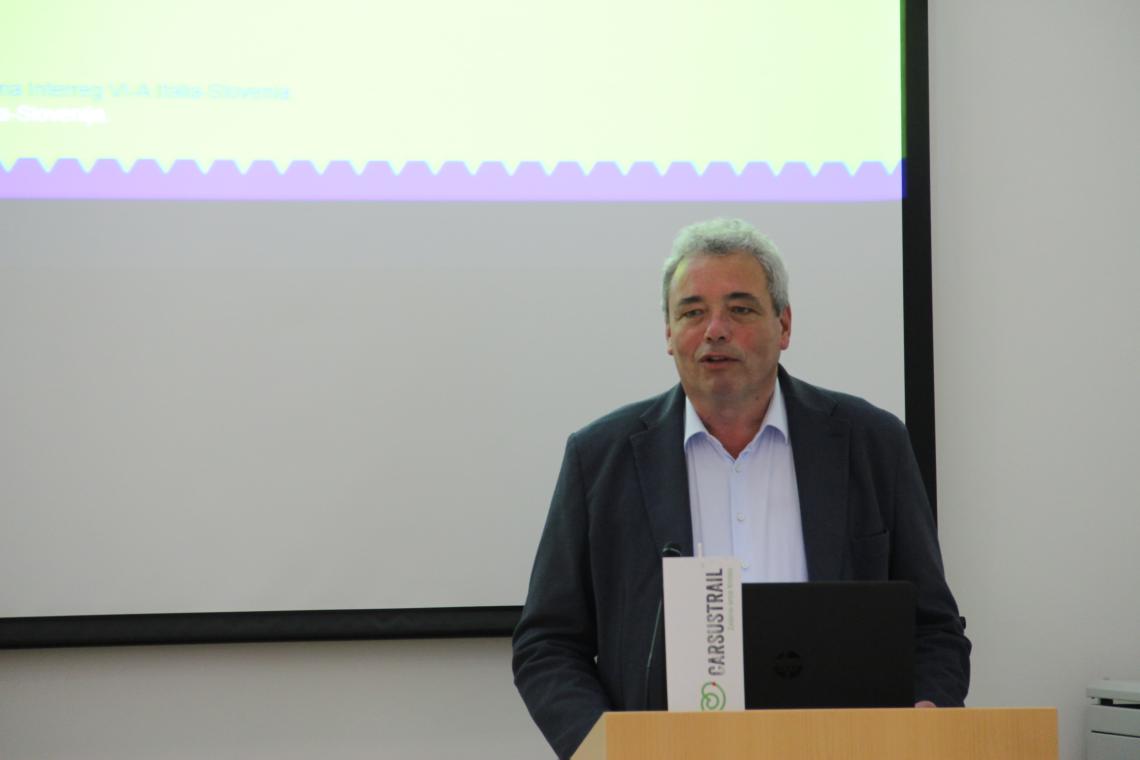
Project leader dr. Massimiliano Granceri Bradaschia (IUAV) presented the project's overarching goal — the development of cross-border action plans to reduce vulnerability and enable early fire detection through monitoring and warning systems. He also captured the project's spirit through its symbol: the logo in three colours unites red (firefighters), blue (civil protection) and green (forest rangers) — all those who protect the Karst's nature every day.
Local communities as the pillar of sustainability
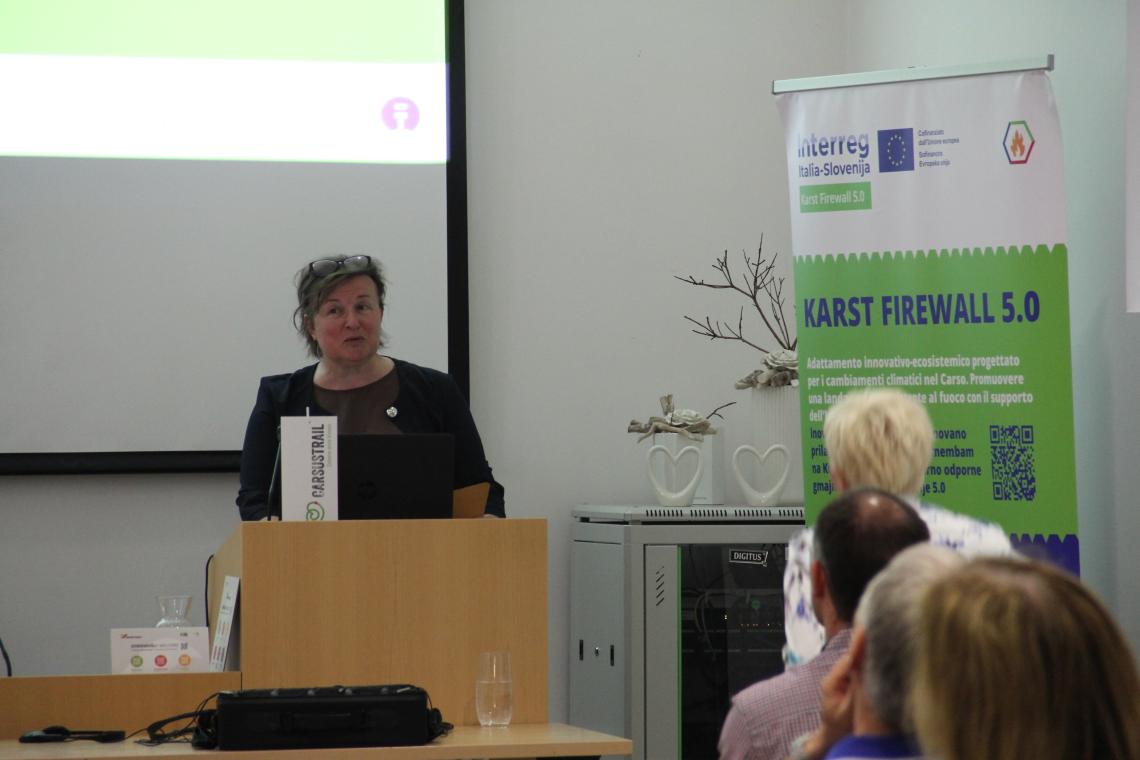
Staša Gregorič presented the measures taken by the Municipality of Miren-Kostanjevica, which developed an action plan for pilot fire prevention activities aimed at creating a fire-resilient cultural landscape. "Today we are proud of the cleared area at Kremenjak, even though the aftermath of the 2022 fire made it very difficult," she said. At Kremenjak, donkeys now graze and help maintain the area, while in Lipa, dry stone walls destroyed in the fire were restored together with the local community and partners in traditional Karst dry stone construction. "This restored dry stone wall is an encouragement for other farmers to invest in prevention." The Municipality also acquired equipment — a drone with a thermal camera, a thermal camera and a chainsaw with a branch cutter — which today actively supports the municipal civil protection headquarters.
The Deputy Mayor of the Municipality of Duino-Aurisina, Mitja Petelin, stressed that political borders do not exist in nature: "We have a border that is political, but in nature it doesn't exist — and such projects allow us to carry out joint projects to protect our shared territory, the Karst." The Municipality directed its resources towards forest clearing and the acquisition of advanced technology. Among the key acquisitions are electronic noses — sensors that detect certain gases and can identify a fire even before a camera notices it: "The camera and drone give us extraordinary eyes for detection, but the electronic noses help us detect a fire even earlier." The shared goal of both municipalities remains clear: "Protecting our most precious treasure — our green Karst."
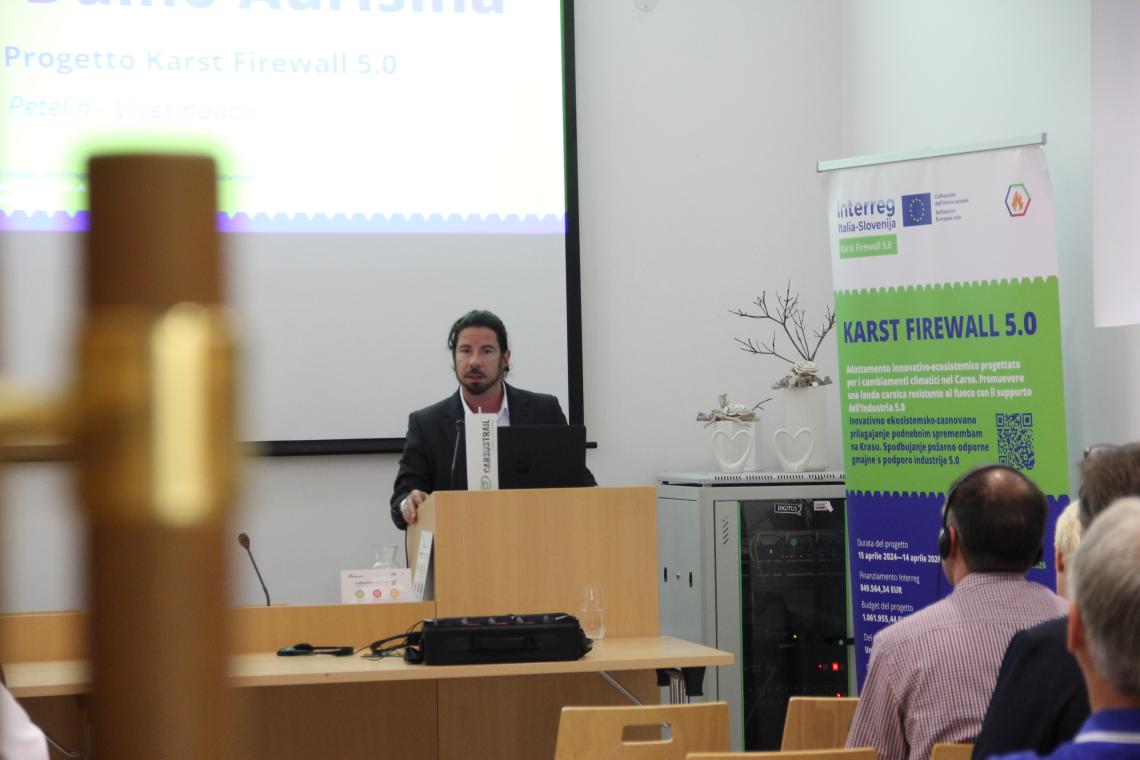
Satellites, Drones and GIS: A view from above
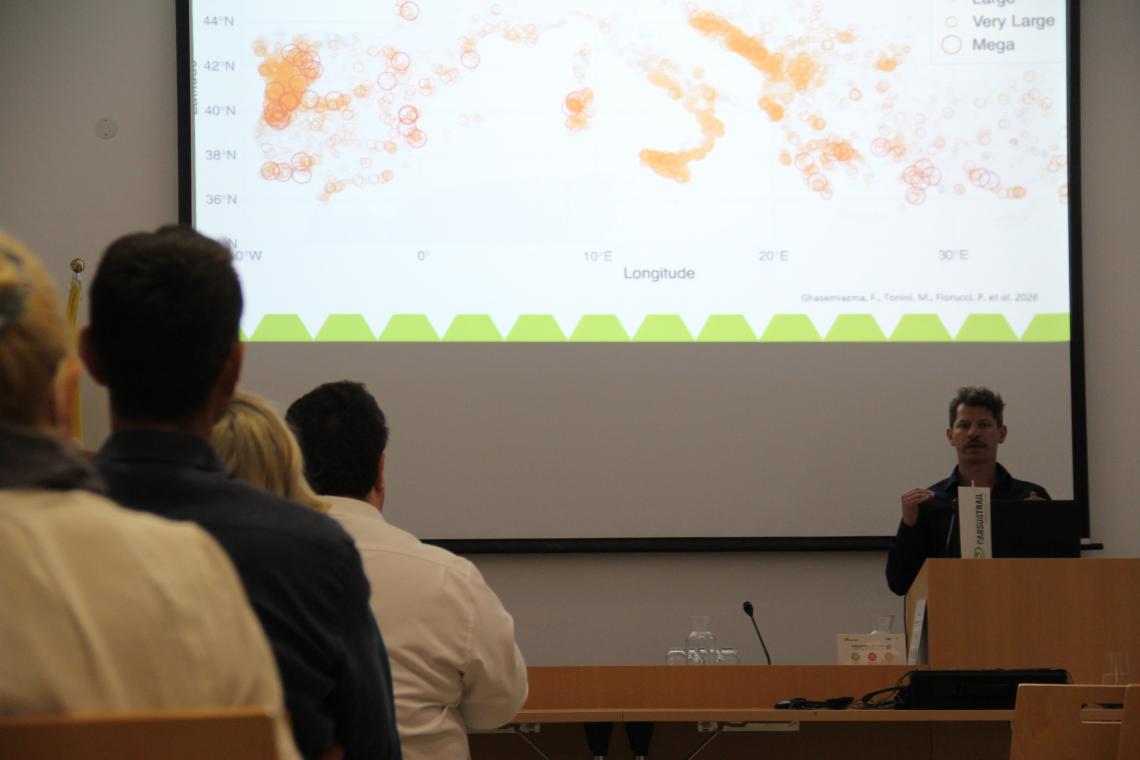
Dr. Rok Ciglič (ZRC SAZU) presented the use of satellite imagery, drones and GIS tools in understanding fires on the Karst. The fire archive established through the project enables monitoring of vegetation recovery, consideration of areas' prior exposure to fire, and the development of fire spread models. "Throughout the project, the strengths and weaknesses of each technology became clear — with satellite images we are limited by the weather, while drones allow filming even through clouds, though we remain dependent on wind and other factors," he explained.
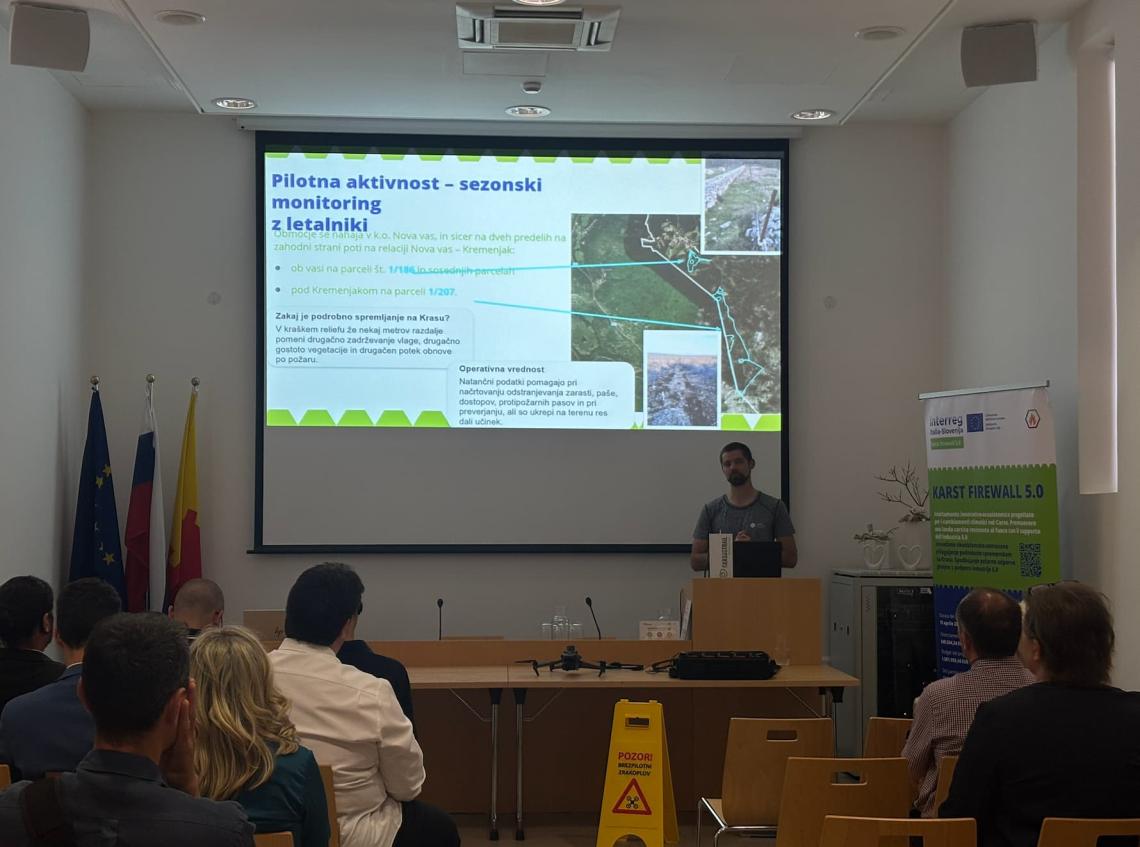
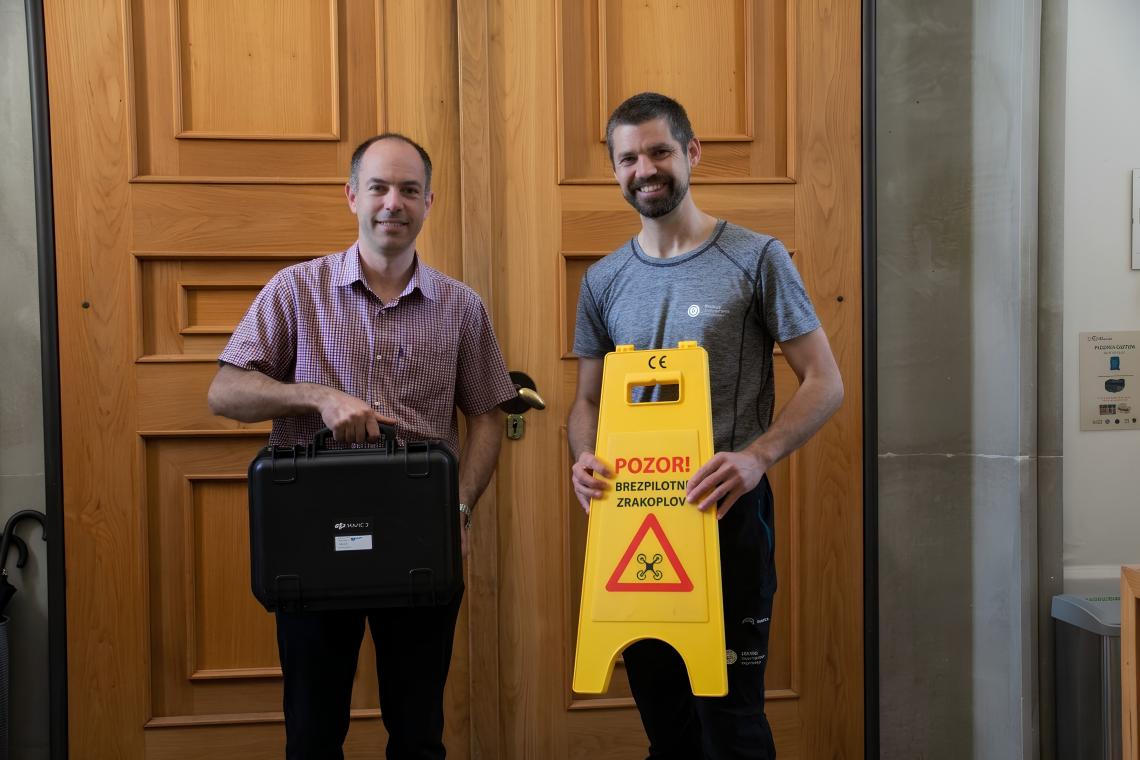
How to reduce fire risk
Giacomo Morassutti (IUAV) presented strategies and guidelines for reducing fire risk, taking into account the exposure of the entire territory: "The more our territory is exposed — infrastructure, houses, power lines, railways — the greater the fire risk. But we have ways to reduce it: by increasing responsiveness to such events and through prevention itself."
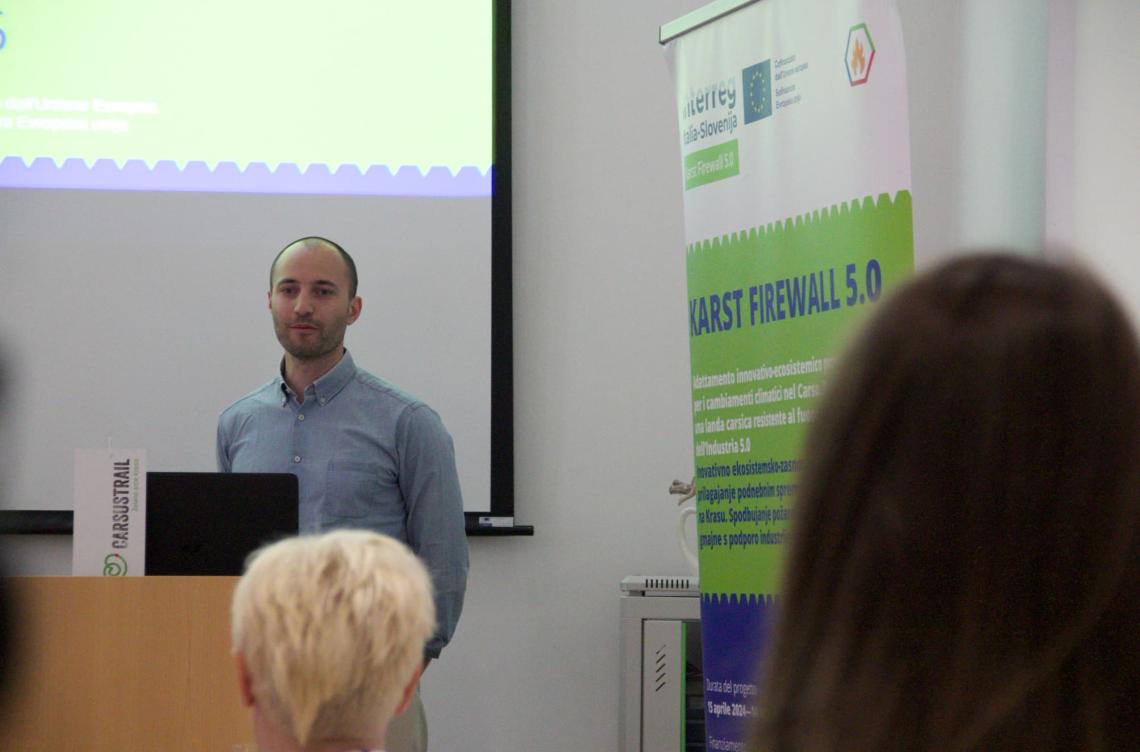
Predictive artificial intelligence detects drought
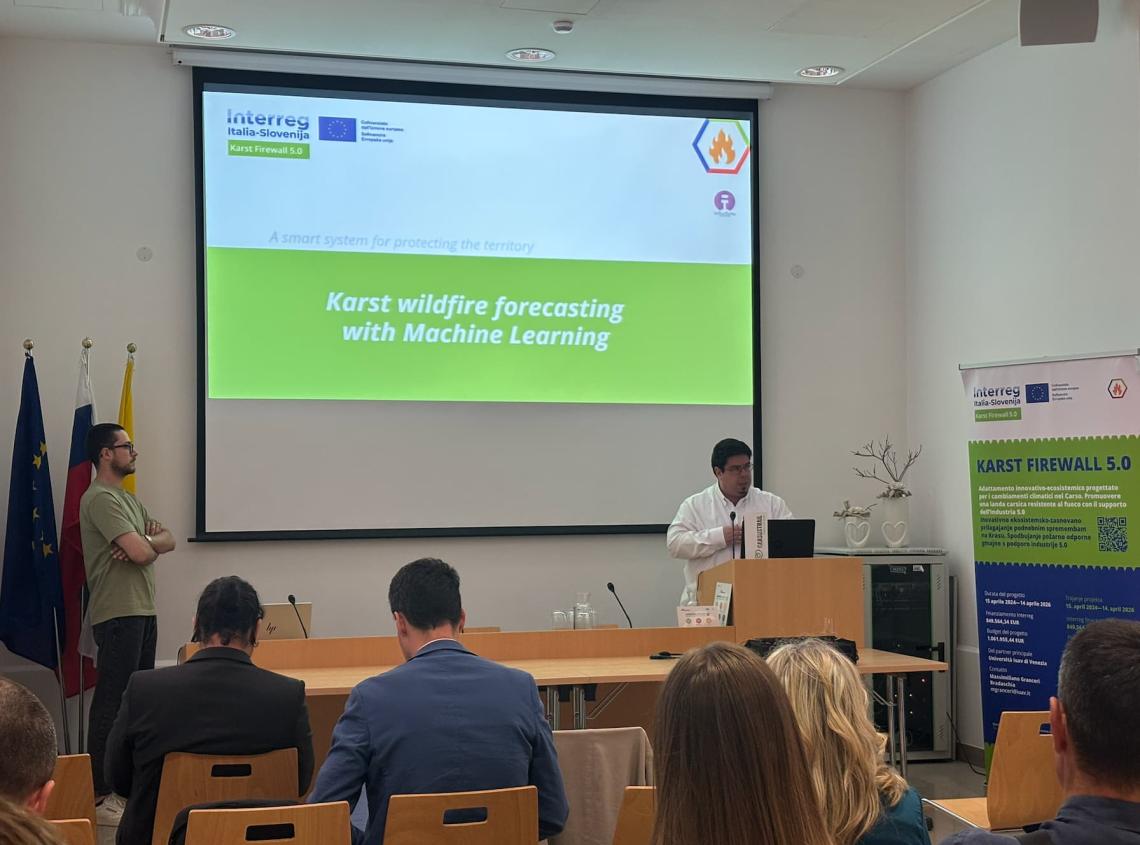
Marko Petelin (Infordata sistemi) concluded with a presentation of the integrated platform based on predictive artificial intelligence algorithms. The system analyses data on soil moisture and weather conditions and flags areas with a high risk of ignition. He highlighted the philosophy behind the technology: "People, with their emotions, must be at the forefront of technology. Algorithms must be used to the benefit of society and individuals."
The Karst enters a new era of fire prevention
With the implementation of cross-border action plans, advanced equipment and digital platforms, the Karst is entering a new era of fire prevention — where data, technology and human collaboration become the first line of defence for our forests.
The final conference of the Karst Firewall 5.0 project was not merely a presentation of achievements — it was proof that on the Karst, where the political border dissolves into a shared landscape, a shared responsibility is also born. From the restoration of dry stone walls and preventive grazing to satellite monitoring and artificial intelligence algorithms: the project demonstrated that lasting protection of nature does not come from a single measure, but from the interweaving of knowledge, technology and people for whom this land is home. The Karst has always been resilient — now it is also better prepared.