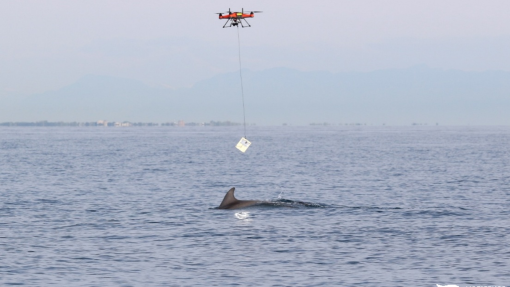
As part of the SEAINSIGHTS project, the deliverable dedicated to developing a shared protocol for assessing the health status of marine mammals using drones (UAVs – Unmanned Aerial Vehicles) has been completed. The document represents an important step forward toward adopting innovative, non‑invasive, and harmonized methodologies for monitoring cetaceans in the Northern Adriatic.
Marine mammals are considered sentinel species of marine ecosystems, capable of reflecting the effects of environmental and human‑induced pressures such as pollution, maritime traffic, fishing, tourism, and climate change. In particular, the bottlenose dolphin (Tursiops truncatus), a coastal species typical of the Northern Adriatic, represents an ideal model for long‑term monitoring programs due to its strong site fidelity and frequent interactions with human activities.
The protocol developed within SEAINSIGHTS defines common guidelines for the use of drones in monitoring activities, photogrammetry, photo‑identification, and respiratory blow sampling. This innovative technique makes it possible to collect biological material emitted from the cetaceans’ blowhole without direct contact with the animals, minimizing disturbance and stress compared to traditional sampling methods.
Through the use of drones, high‑resolution images can be obtained to assess nutritional condition, the presence of skin lesions, scars, interactions with fishing gear, and other visible health indicators. At the same time, the collected respiratory samples can be used for genetic, microbiological, hormonal, and molecular analyses, contributing to the study of the physiological and health status of cetacean populations.
The deliverable also places strong emphasis on ethical and operational aspects, defining standardized procedures to minimize disturbance to the animals, ensuring the quality of collected samples, and reduce the risk of contamination during field and laboratory activities. Particular importance is given to integrating the obtained data with existing photo‑identification programs in the Adriatic area, allowing biological information to be linked to individual animals monitored over time.
The adoption of a shared protocol between Italian and Slovenian partners will improve the comparability of collected data, strengthen cross‑border scientific cooperation, and support the development of increasingly effective monitoring systems for the conservation of marine mammals in the Northern Adriatic.
Please find the full report HERE.