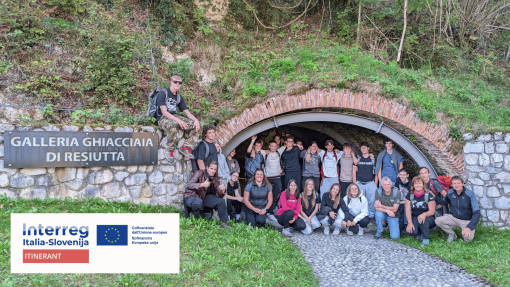
Students from the Biotechnical Centre Naklo visited the Italian part of the Julian Alps Transboundary Biosphere Reserve to discover its natural and cultural heritage and reflect on living in harmony with nature.
How can people live and develop in an area of outstanding natural beauty without damaging it? What would encourage young people to stay in their home villages? These questions guided an educational excursion on 1 October 2026, attended by 25 students from the Biotechnical Centre Naklo and two teachers. The excursion was organised by Triglav National Park and the Julian Prealps Nature Park as part of the ITINERANT project.
The students began learning about the transboundary area during the journey. Mojca Pintar introduced Triglav National Park, its management and the importance of biosphere reserves. Edvin Kravanja complemented this introduction with an overview of the history of the Slovenian community in the area they were visiting.
In Venzone (Pušja vas), the students were welcomed by Cristina Comuzzo, Head of Environmental Education at the Julian Prealps Nature Park, who introduced the park and its protected area. During a guided tour of the town, they learned about its cultural and architectural heritage and the reconstruction following the 1976 earthquake, which took more than twenty years.
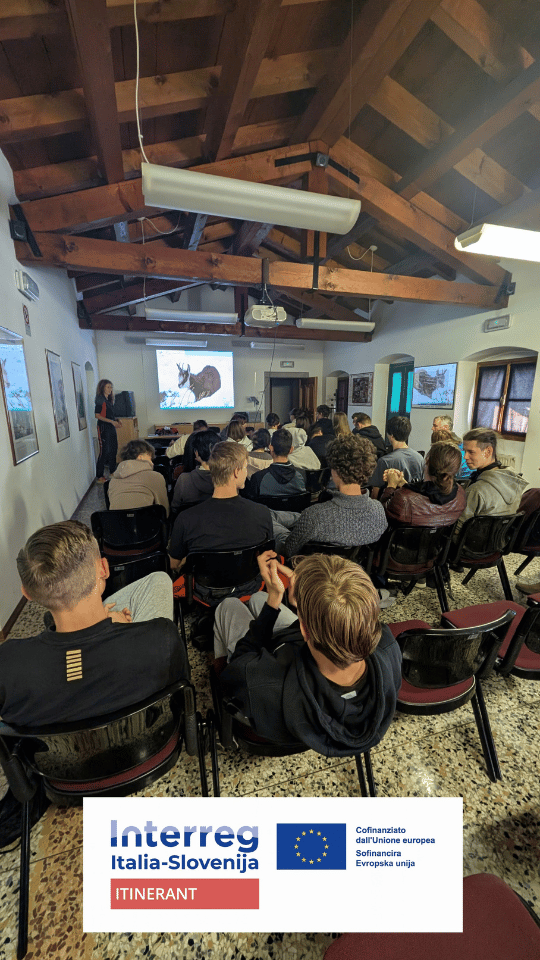
In Resiutta (Bila), the group was welcomed by Andrea Beltrame, the park’s former president. Stefano Santi, Director of the Julian Prealps Nature Park, then guided the students through the Resartico mine exhibition, where they learned about the history of bituminous shale mining. They also visited the ice cave in Resiutta with him.
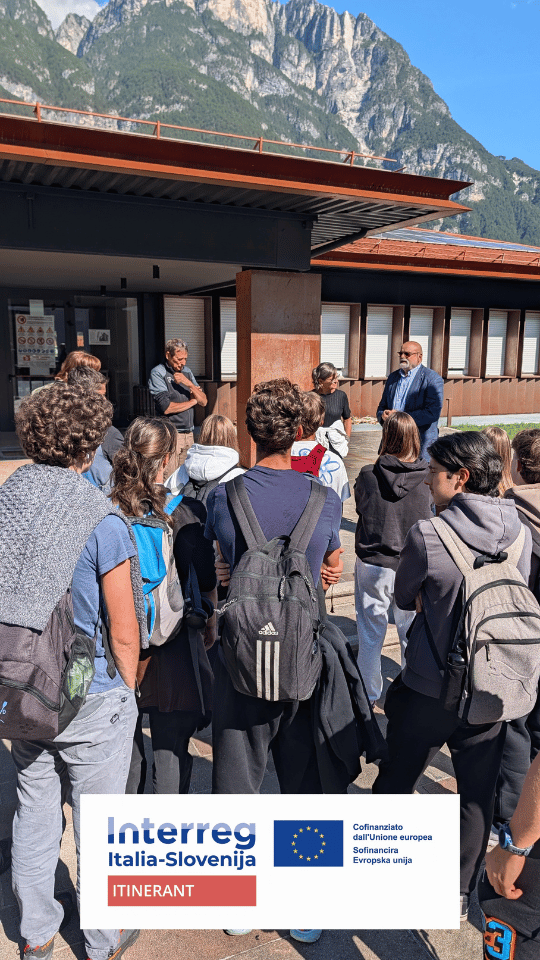
The visits and encounters provided a starting point for discussions about the future of the Julian Alps. The students considered what they would do if they were responsible for the Julian Alps and how to combine nature conservation with development and the quality of life of local communities.
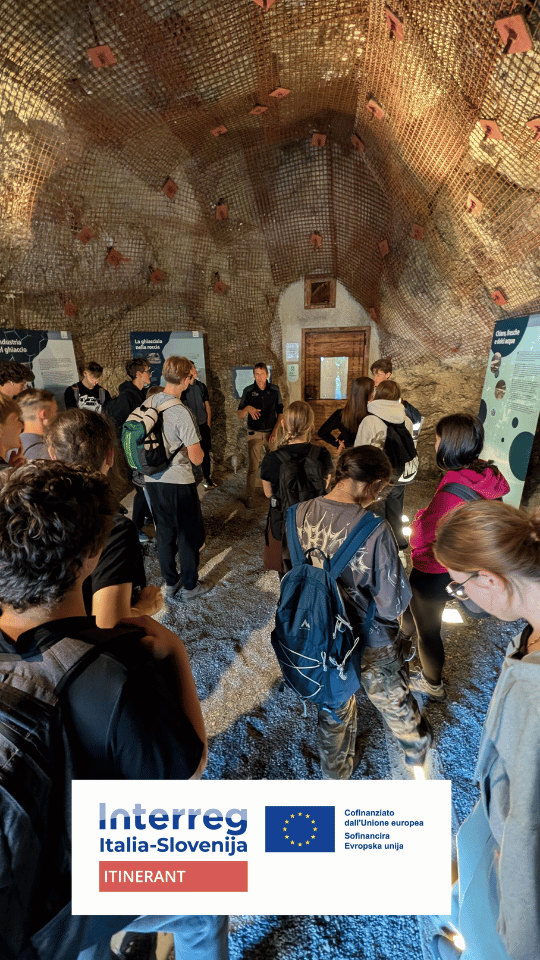
The excursion helped them understand the biosphere reserve as a place where we learn how people and nature can thrive together in the long term. By exploring the Italian part of the reserve and meeting representatives of the Julian Prealps Nature Park, they experienced cross-border cooperation first-hand. They also learned about the roles of the two parks on the Slovenian and Italian sides and their long-standing cooperation.
The excursion is part of the educational activities for secondary schools within the ITINERANT project – For a Better Quality of Life in the Julian Alps Biosphere Area through Sustainable Tourism, co-funded by the European Union under the Interreg VI-A Italy–Slovenia Programme 2021–2027.