KARST-SAFE
Specific objective: SO 4 - Promoting climate change adaptation and disaster risk prevention, resilience, taking into account eco-system based approaches
Typology: capitalisation project
Due to climate change and the resulting ever-increasing risk of fire in the natural environment, the project is aimed at preparing preventive measures to protect against fires in the cross-border area of the Karst, with an emphasis on the protection of the population and settlements.
Based on their experience with the recent fire in the Karst, the PP are aware of the importance of prevention, therefore, in cooperation with different expert institutions, as well as other stakeholders, they will develop joint solutions to prevent the risk of accidents and strengthen preparedness to react to fires.
The main objective of the KARST-SAFE project was to reduce fire risk in the cross-border Karst area by implementing preventive measures that contribute to greater safety for residents, settlements, and the natural and cultural landscape.
The project promoted sustainable land management by reducing overgrowth and the amount of combustible biomass, strengthening grazing practices, and improving preventive forest management. Particular emphasis was placed on involving the local population, landowners, and livestock breeders in the implementation of preventive measures, as well as on raising awareness of the importance of active landscape management in reducing fire risk.
The project also aimed to improve preparedness for responding to fires by establishing appropriate fire-prevention infrastructure, purchasing specialised equipment, and preparing expert frameworks for the long-term planning of preventive measures at local and national levels.
Watch the video showcasing the results of the KARST-SAFE project
The KARST-SAFE project achieved significant environmental, spatial, and organisational impacts. The project importantly contributes to the further development of the effects of the CROSSIT SAFER project by enhancing its impact and consolidating its outcomes through transfer and reuse among new partners and new target groups. Within the cross-border area of the Karst region, 174 hectares of new grazing areas were established or expanded, reducing land overgrowth, the amount of combustible biomass, and fire risk in the vicinity of Karst settlements. At the same time, the project contributed to the reuse of agricultural land and the long-term preservation of the cultural landscape.
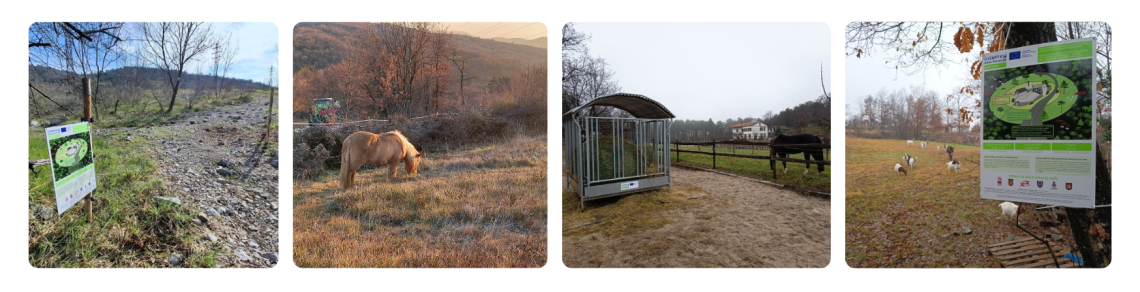
Through public calls, 28 project proposals were supported in more than twenty Karst villages, confirming the high level of engagement of local communities and the successful involvement of residents in the implementation of preventive measures.
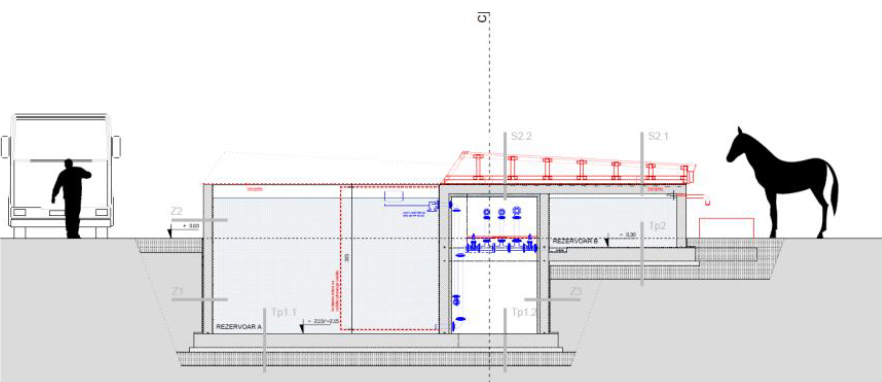
The sketch below shows the plan for water reservoirs.
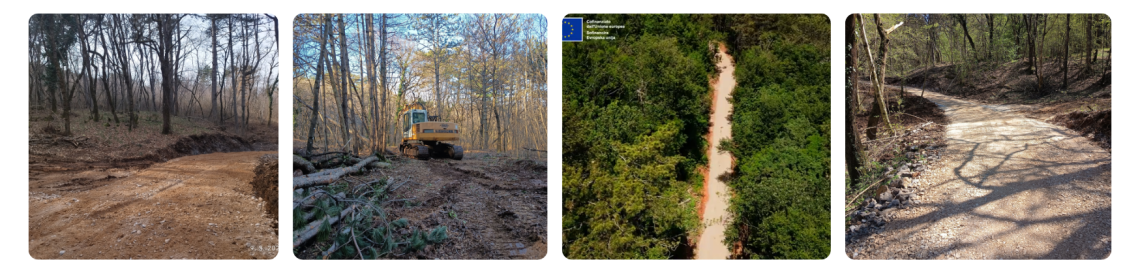
The restoration of forest roads in the areas of Aurisina (Nabrežina), Medeazza (Medjevas) and Merče was completed, improving access to forest areas and providing better conditions for forest management and the implementation of fire protection measures. The completed works significantly contribute to increased safety, more effective responses during natural disasters, and sustainable management of forest areas.
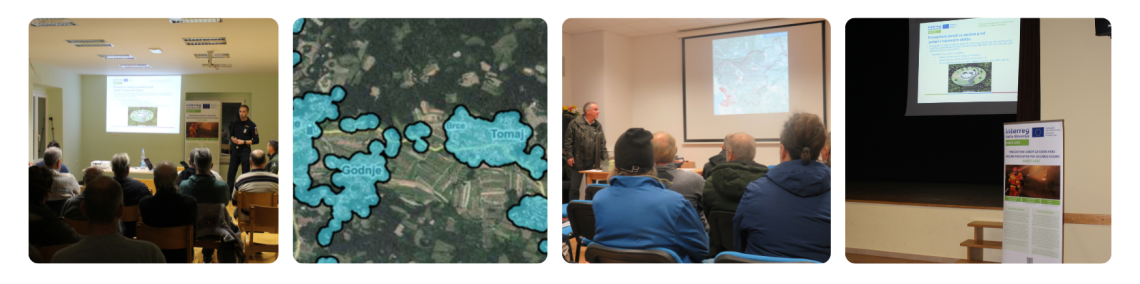
An important result of the project was also raising residents’ awareness of the importance of preventive action in the surroundings of settlements, as well as the preparation of a digital representation of 50-metre protective zones around Karst villages. These zones represent an important spatial measure for limiting the spread of fires towards populated areas.
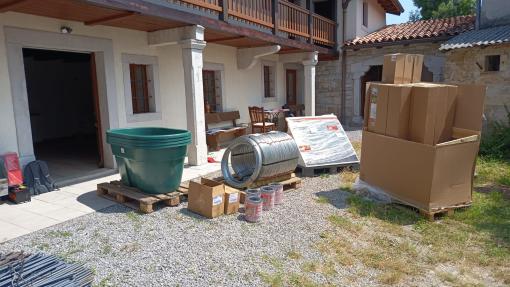
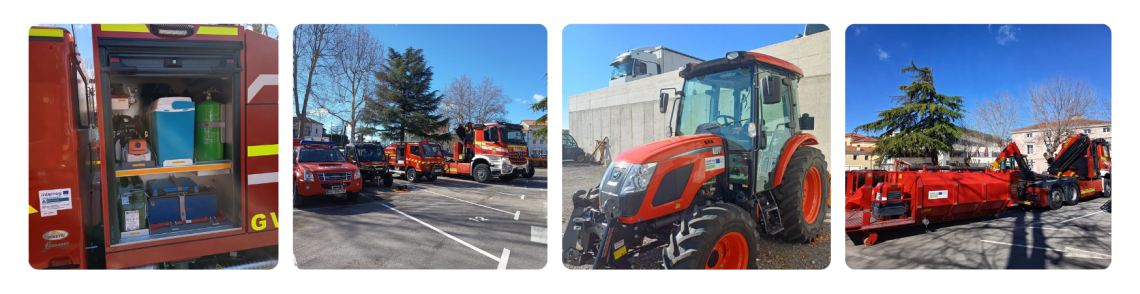
The project also improved operational preparedness for fire response through the procurement of specialised firefighting equipment, the identification of locations for helicopter water collection, and the preparation of documentation for the construction of new water supply reservoirs. This increased the capacities and responsiveness of firefighting units operating in the challenging Karst terrain.
At the institutional level, expert foundations were prepared for amendments to municipal spatial planning acts, along with recommendations for improving systemic incentives for the maintenance of agricultural land. The project therefore represents an example of good practice in cross-border cooperation and integrated preventive fire-risk management. Its results will contribute to greater safety for residents and the sustainable development of the Karst region even after the project’s completion.
Output 2.1.2: Jointly developed strategies and action plans
Output
Direct result 1.1: Action plan for the implementation of preventive fire protection measures in the cross-border Karst area
Piano Antincendio KARST-SAFE IT
Programme result indicator:
Output 2.1.1: Jointly developed pilot actions carried out within the framework of projects
Output
KARST-SAFE workshops for livestock farmers and local stakeholders
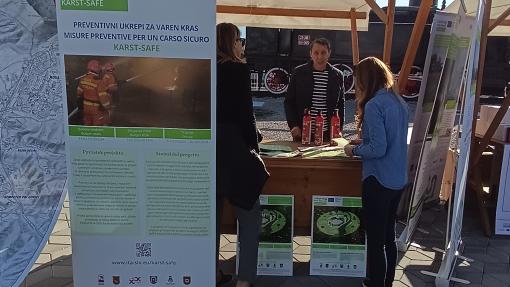
Presentation of the funding call for preventive measures to ensure a safer Karst
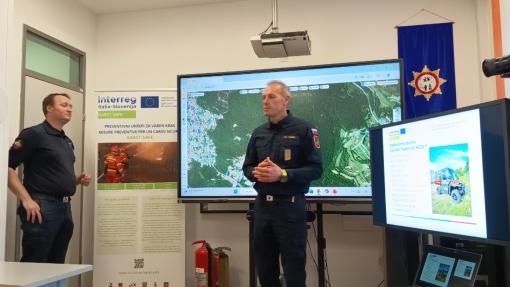
Presentation of the fire risk mitigation action plan and fire risk map
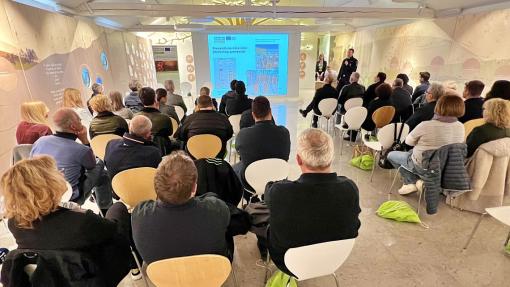
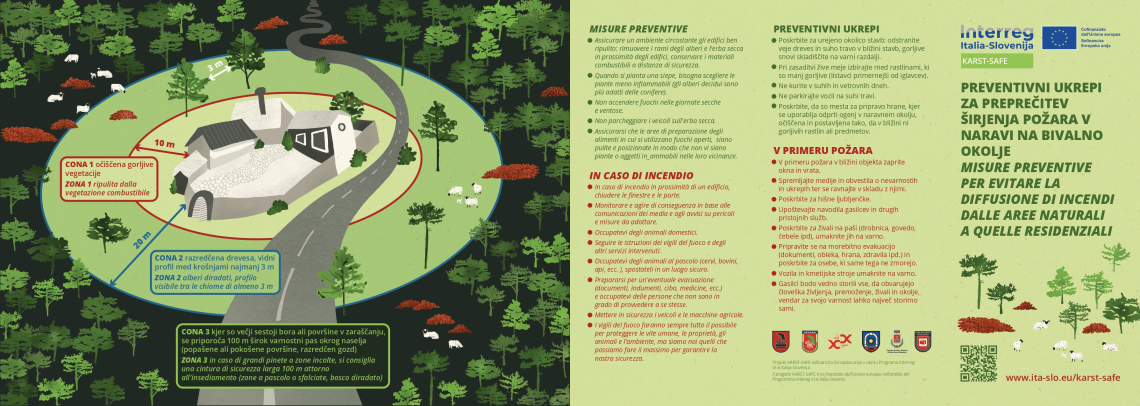
KARST-SAFE call presentation workshop – Štanjel, 9 December 2024
Direct result 2.1: Pilot activity implementing preventive fire protection measures in the pilot area
Outpu
Direct result 3.1: Pilot case of implemented preventive fire protection measures in the pilot area
Output