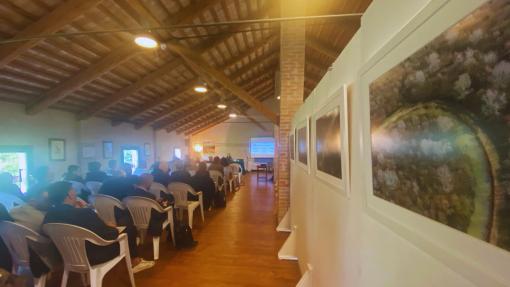
On April 1st, the conference "Actions for Adaptation to Climate Change: From the Regional Strategy to Local and Intermunicipal Policies" was held at Villa Correr Agazzi in San Stino di Livenza. Organized by VeGAL and AsVeSS (Veneto Association for Sustainable Development), the conference was part of the Eastern Veneto Regional Planning Agreement (IPA). The conference was part of the European project Ero-STOP – Advanced and Sustainable Approaches to Soil Erosion Prevention, funded by the Interreg VI-A Italy-Slovenia Programme.
The meeting, attended by approximately 50 people, brought together local administrators, technicians, regional institutions, and stakeholders involved in land management to discuss tools and policies to address the effects of climate change, with a particular focus on soil erosion prevention and water resource management.
Institutional greetings were delivered by the Mayor of San Stino di Livenza, Gianluca De Stefani, the Mayor of Teglio Veneto, Oscar Cicuto, and the President of the Conference of Mayors of Eastern Veneto, Alberto Teso.
The first part of the morning was entirely dedicated to technical presentations.
VeGAL Director Giancarlo Pegoraro began the session, presenting the Ero-STOP project, dedicated to soil erosion. Katia Federico of the Veneto Region's Environment and Ecological Transition Directorate, presented the regional strategy for adaptation to climate change (SRAAC). Gloria Natali (De Materia) then spoke on the Eastern Veneto SECAP, emphasizing how this represents the very tool for implementing the SRAAC. Erika Grigoletto of the Veneto Eastern Land Reclamation Consortium also spoke on the Water Masterplan. Francesco Finotto (Proteco Engineering) concluded the first session on communication activities related to climate adaptation, presenting a photographic exhibition created for today's event.
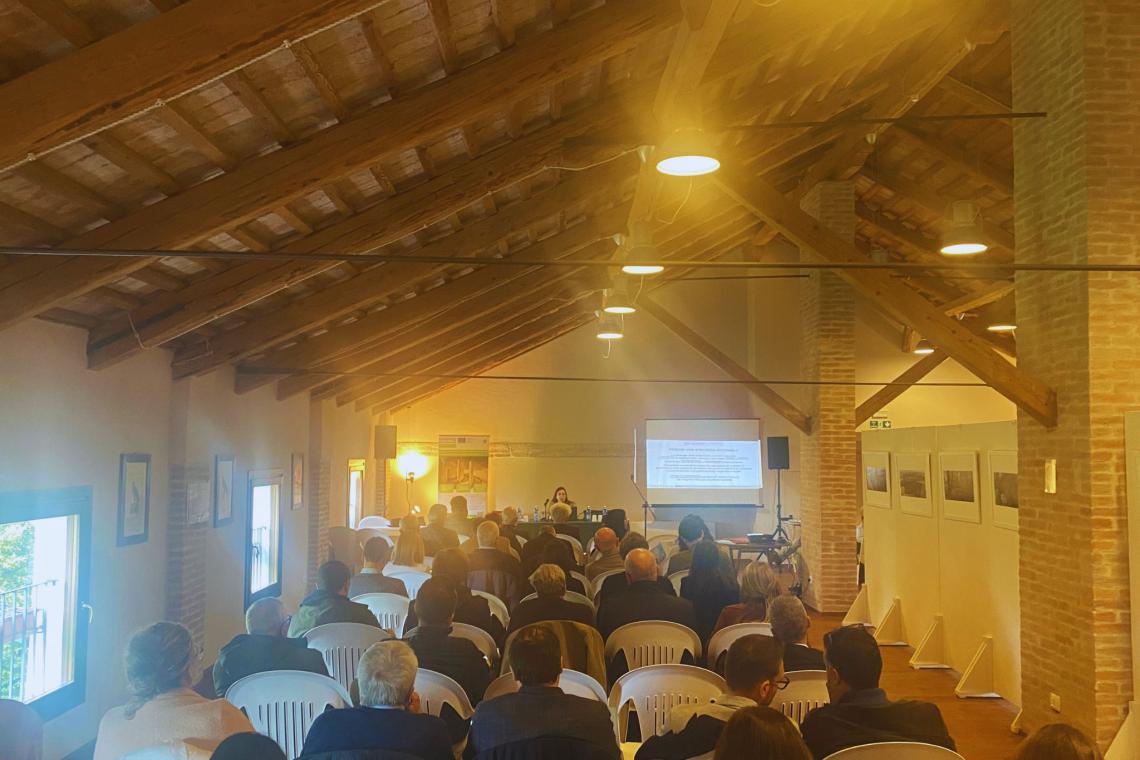
The second part of the meeting, coordinated by AsVeSS, was dedicated to thematic working groups that involved participants in three operational areas: water resource management, hydraulic and hydrogeological defense, and urban planning and nature-based solutions. The working groups analyzed the main critical issues facing the region and identified possible interventions and collaboration methods between local authorities, technicians, and stakeholders.
Once processed, the results of the discussion will be shared by AsVeSS and VeGAL, with the aim of contributing to the dialogue between regional strategy and local policies and strengthening climate change adaptation efforts in the Eastern Veneto region.