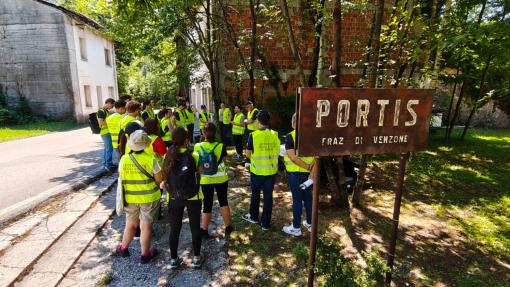
Over 60 participants, including stakeholders and Italian and Slovenian students, gathered in Venzone and Portis Vecchio for two days of training focused on seismic and geological risk, emergency procedures, and post-disaster reconstruction.
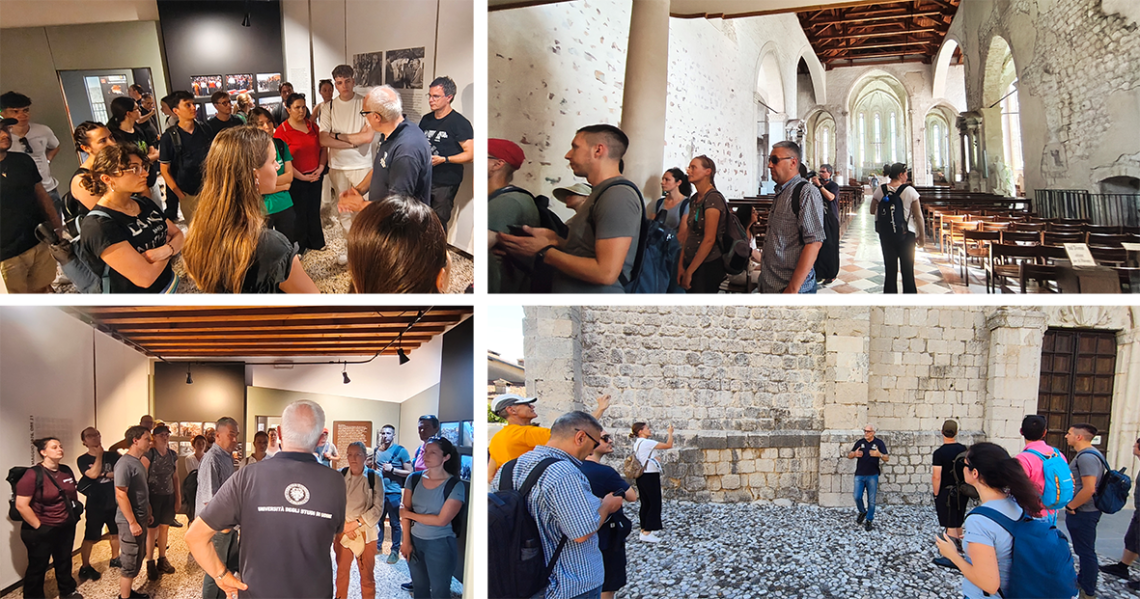
On 22 and 23 June 2026, as part of Work Package 5.2, the CONCORDIA Project (Interreg VI-A Italy-Slovenia Programme 2021-2027) organised two days of educational field trips to the sites of Venzone and Portis Vecchio di Venzone (UD). The initiative aimed to combine theoretical learning with practical and operational application in seismic emergency management.
To ensure a targeted training offer, the activity was structured into two distinct sessions: 22 June was dedicated to technical stakeholders and civil protection operators, whilst 23 June involved university students to promote capacity building for future generations of professionals. Overall, the event saw the participation of over 60 representatives from Italian and Slovenian bodies, institutions, and universities.
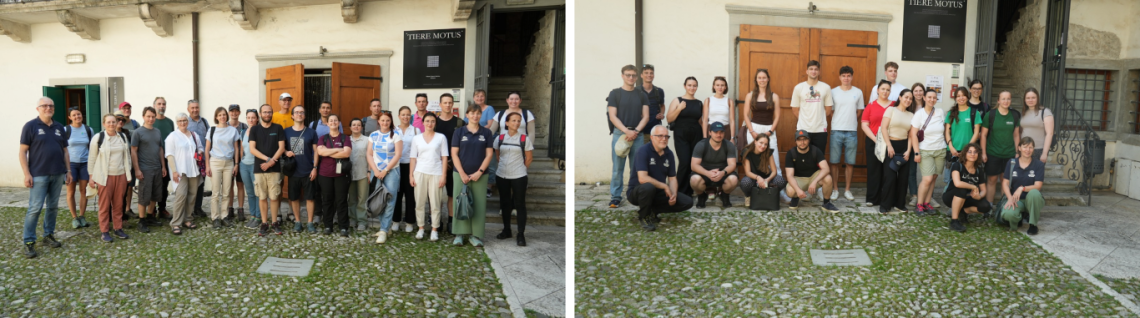
The educational programme, led by professors and researchers from the University of Udine (UNIUD), was divided into three main thematic areas:
- Seismic and Geological Risk Assessment: Under the guidance of Prof. Poli, participants analysed the regional seismotectonic context. The activity included direct observation of local geomorphological criticalities, with particular attention to landslide and impending rockfalls overlooking the abandoned settlement of Portis Vecchio.
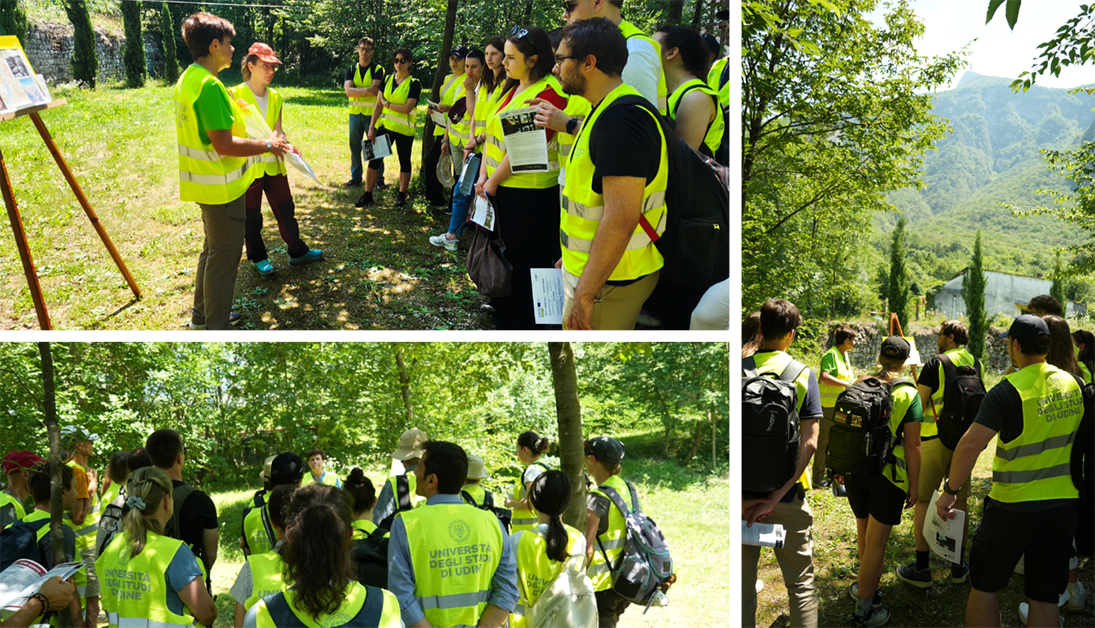
- Emergency Management: Activities took place within the international training camp of the SERM Academy. In this context, the SPRINT-Lab team illustrated the procedures for rapid structural damage mapping and the securing of historical buildings, highlighting the application of tools such as the "iTriage" system and the STOP manual, developed within the activities of the SERM Academy and tested in the Portis Vecchio training camp and subsequently adopted by Italian firefighters.
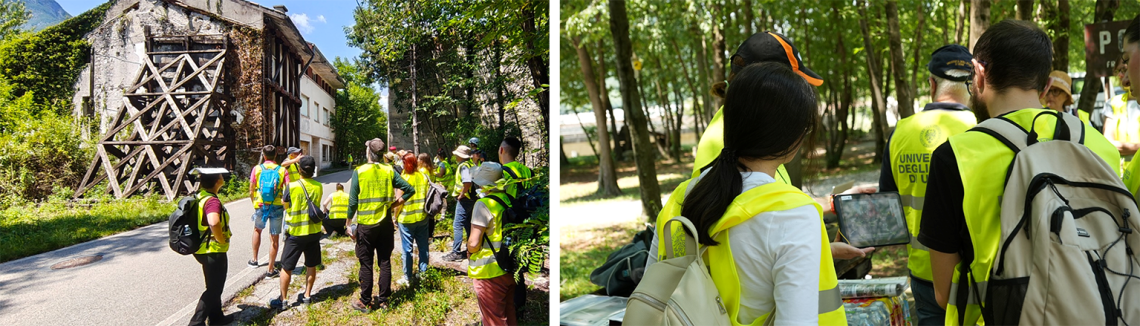
Resilience and Post-Disaster Reconstruction: The training pathway concluded with an in-depth study of the historical experience of the territory's rebirth. The itinerary began at the Tiere Motus museum for a general analysis of the impact of the 1976 earthquake. Subsequently, the group visited the historical centre of Venzone, examining on-site the recovery of the Cathedral, faithfully rebuilt using the anastylosis technique. The training day finally concluded with a return to the museum to use the immersive simulator, which allowed participants to observe and technically understand the collapse mechanisms of the Cathedral during the shock of 6 May 1976.
This field initiative represents a significant milestone for the CONCORDIA Project, contributing to strengthening interoperability between the institutions of Italy and Slovenia and promoting the development of shared languages and protocols for seismic risk mitigation in the cross-border area.