Species distribution models are statistical models that attempt to explain the presence/absence of a given species in a given area, in relation to a certain set of data. For example, these models can help describe the distribution of dolphins in terms of variables such as bottom depth, distance from coast and fishing effort. Species distribution models have become an essential tool for ecologists and conservationists, as they enable to describe the complex ecological relationships between species and their environment. Species distribution models can also predict species distributions across spatial and temporal scales, thus providing quantitative baselines for conservation management.
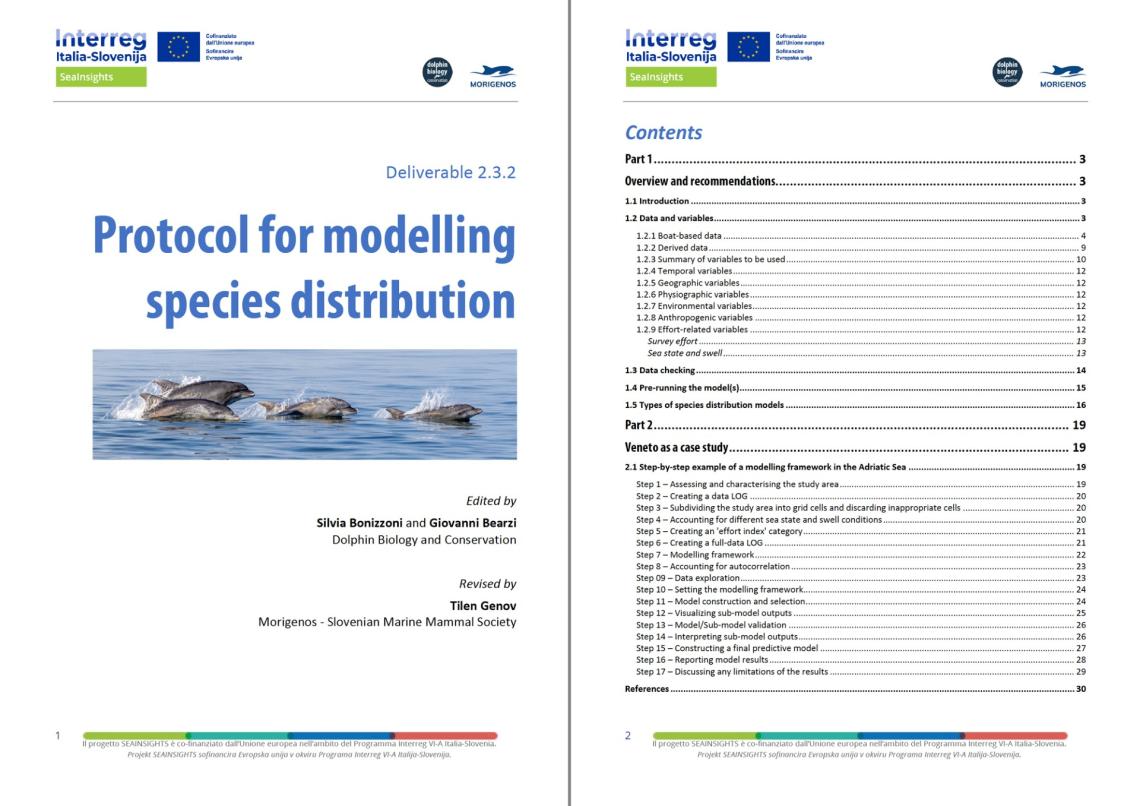
In the context of the Interreg project "SeaInsights", a 34-page protocol was produced to help researchers who use (or are planning to use) distribution models to investigate the distribution and habitat use of dolphins and other marine megafauna in the Adriatic Sea. The protocol – edited by the Italian partner Dolphin Biology and Conservation, and revised by the Slovenian partner Morigenos - Slovenian Marine Mammal Society – focuses on the common bottlenose dolphin and takes into account the specific features of the Adriatic Sea basin. It lists the main variables likely to affect the distribution of marine megafauna, while also describing how such variables should be recorded, classified and included in a database to allow for subsequent distribution analyses.
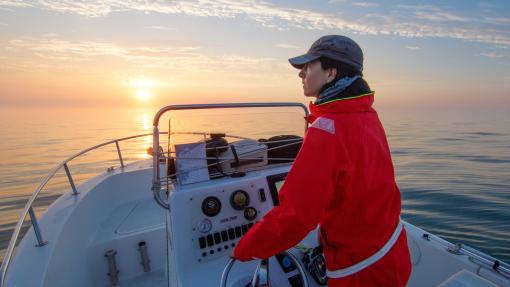
Much attention is given to bias resulting from effort-related variables such as navigation effort and sea conditions. These variables are extremely important and deserve special attention but are often overlooked. Survey effort and sea conditions have a strong impact on the likelihood of spotting dolphins and tracking their movements. As the authors point out, "neglecting to include these variables in dolphin distribution models can distort data interpretation and yield inaccurate results".
The protocol lists the modelling approaches most often used in cetacean studies, while noting that their application is study-specific and it depends on the data and on the characteristics of the focal species. In other words, there is no a single 'best' modelling approach that fits all cases, and in some cases a combination of models can be the best approach. Additionally, each approach has specific assumptions that need to be met.
The second part of the protocol consists of a step-by-step example of a modelling framework in the Adriatic Sea, with a total of 17 steps that offer a detailed description of the procedure. Such practical example will provide the reader with a better understanding of the method, that can then be adapted to the specific needs of the study.
Finally, the protocol includes about 70 selected references, with those containing comprehensive information on distribution modelling being underlined – with the intention of directing additional investigation efforts by the reader. Overall, the "Protocol for modelling species distribution" produced by the Interreg project SeaInsights can represent a valuable tool, both for beginners and those who aim to improve their current skills or expand their understanding of dolphin-related modelling.
You can find a ful document of the protocol HERE.