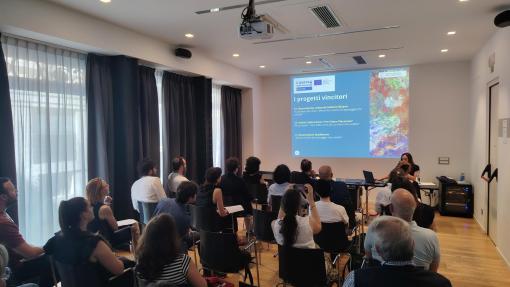
On 25 June 2026, in the Meeting Room of the Palace Suite Hotel in Trieste, the event "The Role of Cultural and Creative Enterprises in the Regional Policies of Friuli Venezia Giulia: Sustainability, Innovation and Public-Private Partnership" took place — an occasion dedicated to presenting the winning projects of the RE-ACTIVE Call, promoted by the Central Directorate for Culture and Sport of the Autonomous Region of Friuli Venezia Giulia. The call supports cultural initiatives aimed at raising awareness among citizens and communities on climate change and sustainability. The event drew a large audience, with over 50 attendees including representatives of institutions, cultural operators and regional stakeholders, confirming the strong interest in the topics addressed.
The meeting opened with a presentation of the RE-ACTIVE project and the activities to be developed over the coming months. The 14 grant beneficiaries then presented their projects, highlighting innovative and creative approaches to tackling the challenges of environmental sustainability and climate change through culture. The event provided an important opportunity for dialogue among those involved, showcasing the variety of languages, tools and perspectives through which the cultural sector interprets and promotes these themes.
The morning concluded with an introduction to the afternoon focus group, outlining its objectives and methodology.
In the afternoon, a small group of 20 stakeholders and officials from the Central Directorate for Culture and Sport of the Autonomous Region of Friuli Venezia Giulia took part in a focus group aimed at gathering experiences, needs and proposals to help define the future regional guidelines for organising sustainable cultural events. Guided by an expert moderator, participants shared the main challenges they face in integrating sustainability into the design and management of cultural events, offering observations and suggestions that will form a valuable basis for developing future regional policies. The initiative confirmed the value of dialogue and collaboration between institutions and cultural operators, helping to build a shared vision for an increasingly sustainable cultural sector.