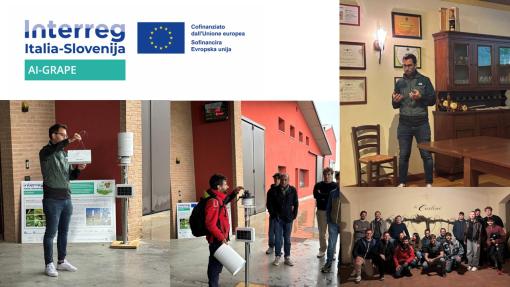
Last week, an intense, engaging and highly participatory study visit took place within the framework of the European project AI-GRAPE, involving around twenty students from the Cerletti Agricultural Institute of Conegliano, accompanied by two teachers, together with several entrepreneurs from the wine sector.
The initiative aimed to demonstrate in practical terms how artificial intelligence can support a more sustainable and resilient viticulture through the development of advanced digital tools for monitoring and managing vineyard pests.
Despite particularly adverse weather conditions – including cold temperatures, heavy rain and even hail that affected the group on May 12 – the day was successfully carried out thanks to everyone’s commitment and to the hospitality of project partner Le Carline.
The bad weather prevented the bus from reaching the experimental field where the project equipment is installed, but the AI-GRAPE team managed to turn the unexpected situation into an opportunity: the monitoring devices were brought directly to the winery, allowing participants to closely observe how the project’s DSS (Decision Support System) works.
The system, one of the key outcomes of AI-GRAPE, uses sensors, data collection and artificial intelligence algorithms to support the monitoring of grapevine moths, helping optimize plant protection interventions while reducing the environmental impact of agricultural management.
The second part of the day took place in the Le Carline meeting room, where students, teachers and entrepreneurs took part in an open and dynamic discussion with the agronomists involved in the project and with the technology partner Primo Principio.
The discussion was lively and engaging, filled with questions, curiosity and reflections on the future of digital agriculture, the practical applications of artificial intelligence and the new skills required for future generations of professionals in the sector.
The meeting concluded with a presentation by Veneto Agricoltura, associated partner of the project that supported the involvement of the Cerletti Agricultural Institute, focusing on resistant PIWI grape varieties and the future perspectives of sustainable viticulture.
The study visit also represented an important opportunity for internationalization: AI-GRAPE and the Interreg Italy–Slovenia Programme were also presented to a delegation from the Brazilian agricultural institute “Etec Benedito Storani”, highlighting the growing international interest in innovative models of smart agriculture and cross-border cooperation.
Through activities such as this, AI-GRAPE continues to promote dialogue between research, businesses, schools and local communities, with the goal of building an agricultural sector that is increasingly sustainable, technological and capable of addressing future climate challenges.