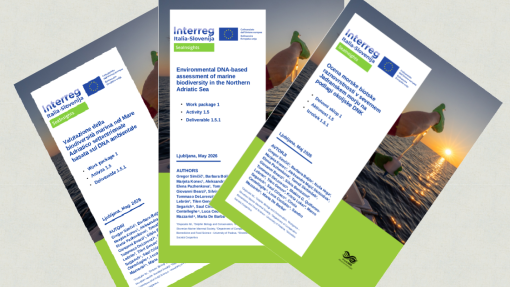
As the main deliverable of Work Package 1, the SeaInsights project partners have released a technical report detailing the results of a cross-border pilot survey that used environmental DNA (eDNA) to monitor marine life in the Northern Adriatic Sea. Presenting the results of the first such study in the area, the report evaluates the feasibility of eDNA metabarcoding as a non-invasive, large-scale monitoring approach to enhance traditional marine surveying methods like underwater visual censuses or bottom trawling. The study targeted three specific taxonomic groups with differing biology and ecology: fish, decapods, and marine mammals.
Between August 2024 and April 2025, three field teams collected seawater samples across a network of 24 sampling stations. Twelve stations were in the western area (sampled by Dolphin Biology and Conservation) and twelve in the eastern area (sampled by Morigenos and Shoreline). A total of 119 sampling events were collected. The genetic analysis was performed by using four universal markers: two for actinopterygian fish, one for decapod crustaceans, and one for mammals.
Out of the 119 processed samples, the eDNA metabarcoding analysis detected at least one target taxon in 106 samples, identifying a total of 105 unique taxa across the four markers. Seventy-five of these taxa were resolved to the species level.
Fish taxa were detected in 82.4% of the samples. The three species detected with the highest relative sequence abundance were the European anchovy (Engraulis encrasicolus), European sardine (Sardina pilchardus), and gilthead sea bream (Sparus aurata). Nearshore stations generally yielded a higher number of detected taxa than offshore stations.
Decapods were detected in 28.6% of the samples, yielding 17 unique taxa. The invasive blue crab (Callinectes sapidus) was the most common species by relative sequence abundance and frequency of occurrence (number of samples in which it was identified), though it was detected exclusively in the western sampling sector.
The common bottlenose dolphin (Tursiops truncatus) was the sole marine mammal identified. It was detected in two samples collected along the eastern sector near the Slovenian coast during February and March. The low detection rate can be attributed to the low biological biomass density of the species in the study area.
Approximately 10% of the total fish sequence reads belonged to freshwater taxa, including farmed salmonids. Detections of more than 10 freshwater species in a single sample occurred near the Soča/Isonzo river estuary and the Marano lagoon, indicating the transport of inland genetic material into the marine environment.
As the first study of its kind in the region, this pilot represents a valuable snapshot of marine biodiversity across the Northern Adriatic Sea. Overall, the pilot can be deemed successful, demonstrating that cross-border monitoring using environmental DNA is entirely possible. Through the execution of this work package, the project partners have successfully established the necessary know-how, standardized protocols, and operational experience required to carry out large-scale, transboundary genetic monitoring programs in the future. The complete report is available in Slovenian, Italian and English language.