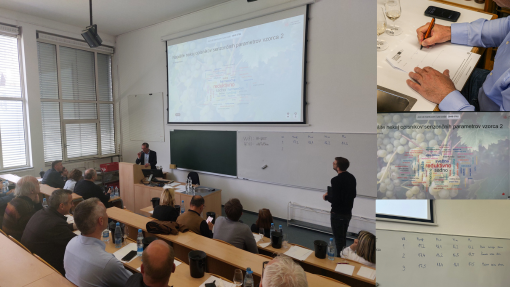
On 8 April 2025, the IRRIGAVIT project was presented at the Department of Food Science and Technology of the Biotechnical Faculty of the University of Ljubljana, as part of the Continuing Training Programme for Official Wine Tasters (DIPV 2025), organised under the auspices of the Slovenian Ministry of Agriculture, Forestry and Food.
During the meeting, the Agricultural Institute of Slovenia (KIS) presented the preliminary results of the trials dedicated to the Pinela variety, with particular attention to the effects of different irrigation regimes on the composition and sensory quality of the wine. The session, lead by dr. Klemen Lisjak, included in the mandatory refresher programme for official tasters, brought together around 70 participants and made it possible to compare the research findings with the judgement of a highly qualified panel of experts responsible for the organoleptic assessment of Slovenian wines.
At the end of the presentation, the participants anonymously tasted three microvinified Pinela samples obtained from the experimental vineyards in Šmarje, managed under different levels of water availability: optimal irrigation, moderate water deficit and severe water deficit. The assessment was carried out anonymously in digital mode via smartphones, using a QR code and the Mentimeter platform, making it possible to collect the tasters’ preferences and sensory descriptors in real time through an online form prepared by the Institute.
As this was a paid course, the event is not included among the project’s formal activities. However, the initiative represents a significant step in transferring knowledge and project results to technicians, tasters and operators in the Slovenian wine sector.
Overall, the tastings made it possible to collect useful sensory data that can be compared with the chemical, physiological and agronomic analyses developed within the project. The use of dedicated evaluation forms, digital tools and differentiated panels supported an integrated interpretation of the results, highlighting how water management can significantly influence the organoleptic characteristics of wines and their perception by expert tasters and sector professionals.
The evidence collected was used to support the definition of the IRRIGAVIT guidelines, which promote rational irrigation practices and sustainable soil management in vineyards in the cross-border area. The role of tasting activities as a tool for transferring innovation to the territory was also confirmed, strengthening dialogue between research, wine companies, institutions and training.