The GRENNAT project, led by the Municipality of Nova Gorica, was implemented from July 2023 to September 2025 within the framework of the Interreg VI-A Italy–Slovenia Cooperation Programme. The project brought together partners from Slovenia and Italy with the aim of improving the management of Natura 2000 areas, protecting water resources, increasing biodiversity, and developing green infrastructure and sustainable access to natural areas.
The project followed European priorities for improving the conservation status of habitats and species and promoted cross-border cooperation in the sustainable management of the natural environment. Particular attention was given to transferring good practices from the GREVISLIN project, preparing a joint action plan for Natura 2000 areas, and implementing pilot activities and investments in the Soča/Isonzo, Vipava/Vipacco and Caorle Lagoon river basins.
During the initial phase, the partners established the organisational and communication structure of the project, prepared communication tools, online content and promotional materials, and organised introductory meetings in Nova Gorica and Miren-Kostanjevica. The project was promoted through websites, social media, local media and project brochures.
Key activities included the preparation of technical studies and project documentation for the renaturalisation of the Hubelj River floodplain and the redevelopment of the confluence of the Hubelj and Lokavšček rivers in Ajdovščina. Documentation was also prepared for sustainable access and green redevelopment of areas along the Soča River, the Lijak entry point, and the greening of the urban area surrounding the local health centre.
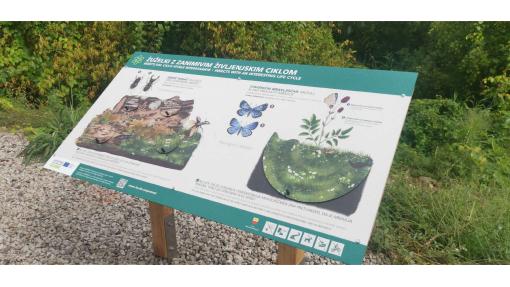
In Bilje, the educational thematic trail “Glinokop v Biljah” was completed, including educational boards for children. In the Cavana di Monfalcone area in Italy, a new nature trail was established with information panels, walking and cycling maps, and multilingual brochures.
An important part of the project focused on improving aquatic ecosystems. In Sagrado, the fish pass at the Soča/Isonzo water intake barrier was upgraded, fish migration monitoring activities were carried out, and a multimedia information point was established in the former dam keeper’s house. The centre was officially opened in September 2025 in the presence of project partners, local institutions and the general public.
In the Caorle Lagoon area, 12 monitoring stations were installed to monitor groundwater, surface water and saltwater intrusion. The collected data enabled the preparation of technical analyses and reports supporting better water management and Natura 2000 protection measures. The project also contributed to sustainable water management in agriculture through the development and testing of a web application for irrigation management in a pilot user area.
At Rihemberk Castle, construction and conservation works were carried out to improve the habitat conditions of protected bat species. In addition, a student workshop on green infrastructure and sustainable spatial planning along the Soča River was organised.
Throughout the project, numerous public events, expert meetings, guided tours, press conferences and a final event in Marina Julia in September 2025 were organised. Through its activities and results, the GRENNAT project contributed to stronger nature protection, greater public awareness and the sustainable development of the cross-border area between Slovenia and Italy.