X-BRAIN.net
Policy objective: PO1 - A more competitive and smarter Europe by promoting innovative and smart economic transformation and regional ICT connectivity
Specific objective: SO1 - Developing and enhancing research and innovation capacities and the uptake of advanced technologies
Typology: capitalization project
The X-BRAIN.net project addressed a common challenge in the programme area in the field of healthcare, related to the development and improvement of research and innovation capacity and the introduction of new technologies in hospitals across the programme area. Patients recovering from stroke account for 15% of healthcare capacity in the programme area. For recovery after stroke, the key factor is to start rehabilitation as soon as possible, with bilingualism being an important factor; therefore, cross-border cooperation between institutions is essential for providing high-quality healthcare in the bilingual area.
The objective of the X-BRAIN.net project was to re-evaluate, transfer and improve the coordinated cross-border bilingual neurocognitive and motor protocols for stroke patients developed within the MEMORI.net project, as well as to create a new solution for rehabilitation services in the cross-border area.
The expected effects of the project were successfully achieved through the implemented activities, as the cross-border cooperation of clinical institutions (ASUGI and SBI) and research institutions (ZRS Koper and DSM-UNITS) served to exchange valuable professional knowledge.
The project partners reused and reviewed the protocols from the MEMORI-net project. They were upgraded with the aim of addressing the consequences of the rapid increase in physical inactivity after stroke, by including physical, cognitive and nutritional interventions for the most effective rehabilitation. Cross-border coordinated and established active rooms for better and more comprehensive rehabilitation of stroke patients, which were put into sustainable use and equipped with state-of-the-art ICT and hardware. Jointly developed physical and cognitive rehabilitation protocols in Slovenian and Italian.
Outputs achieved
By signing an agreement at the end of the project implementation, the project partners expressed their willingness and established the operational foundations for long-term cooperation beyond the conclusion of the project.
The solutions developed within the project have been fully adopted by the partner organisations, which have integrated the active rooms, the related equipment and the innovative rehabilitation protocols into their routine clinical practice. Healthcare professionals have been trained in the use of the methodologies developed and will ensure their continued implementation beyond the conclusion of the project, thereby ensuring continuity of the benefits for patients. The cooperation established among the partners will also enable the progressive updating of the protocols and the further development of the solutions, including with regard to post-stroke home rehabilitation.
The aim of the X-BRAIN.net project was to improve the neurocognitive and motor rehabilitation of stroke patients through the use of modern, scientifically supported rehabilitation protocols and innovative information and communication technologies. The clinical and research institutions involved in the project, in cooperation with associated partners, developed new rehabilitation protocols for stroke patients. The protocols were implemented, used and tested in active rooms. | Research has shown that rehabilitation supported by innovative technologies can improve motor and cognitive recovery after stroke. These technologies are therefore recommended as a complement to traditional forms of rehabilitation. The X-BRAIN.net project introduced new technologies to support rehabilitation. As part of the project, a clinical solution was developed and implemented to enable more effective rehabilitation through the use of innovative ICT solutions. |
"BED REST" clinical study
As part of the X-BRAIN.net project, we conducted an experimental study of prolonged bed rest and physical inactivity in healthy individuals at Izola General Hospital. The aim of the study was to scientifically assess the deterioration of health during a 10-day period of physical inactivity and to examine the effects of individual interventions and their combination.
The study included participants aged between 65 and 70 years. This age group represents approximately the average age of patients who experience an acute brain event. The participants were provided with the best possible care, and we examined whether this approach could reduce the decline in cognitive and physical functions compared with a group that simply remained in bed for 10 days.
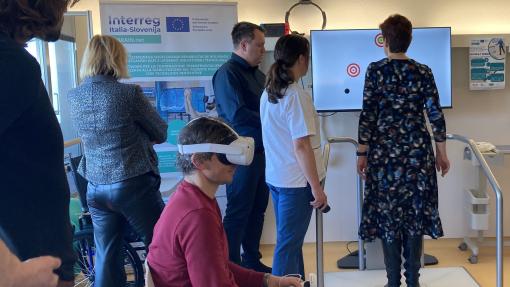
Before the period of bed rest, the participants exercised for two months as part of their physical preparation, which improved their physical fitness. During the 10-day period of bed rest, they received protein-based nutritional supplements and performed cognitive training in a virtual fitness environment using a virtual reality system.
The study was successfully completed. We found that the multidimensional intervention, which included prior physical preparation, cognitive training and nutritional supplements, largely reduced the negative effects of physical inactivity. These included muscle atrophy or loss of muscle mass, loss of muscle strength, insulin resistance, cellular stress, and increased risks of diabetes and cardiovascular disease.
The findings of the study were used in rehabilitation in active rooms.
O1.1 PROTOCOL OF BED REST STUDY
Results
Within the framework of the X-Brain.net project, numerous important results were achieved and key outputs were delivered, including updated bilingual rehabilitation protocols, a cross-border pilot study, the establishment of Active Rooms, the procurement of innovative equipment, professional training, the collection of clinical data and questionnaires, dissemination events, and the preparation of guidelines for the integration of immersive technologies into post-stroke rehabilitation.
Active rooms
In the cross-border area, patients recovering from stroke account for 15% of overall healthcare capacity. Stroke can affect people of working age, with profound consequences for the healthcare system, families and the local economy as a whole.
Although stroke is an acute vascular injury to the brain, it can cause damage throughout the body. The crucial period for successful recovery is immediately after the event, making it very important to start rehabilitation as soon as possible. This process is often hindered by psychological barriers faced by patients. Following the event, depressive behaviour generally occurs, and many patients show very low levels of motivation to continue with their treatment.
The main objective of the X-BRAIN.net project was to coordinate and test new diagnostic and therapeutic methods for motor and cognitive rehabilitation after stroke. As part of the project, state-of-the-art, scientifically supported rehabilitation protocols were used, incorporating innovative information and communication technologies (ICT) to improve the neurocognitive and motor rehabilitation of patients.
The X-BRAIN.net project therefore addressed challenges in the healthcare sector related to the development and improvement of research and innovation capacities through the introduction of new technologies in hospitals, including the establishment of so-called active rooms.
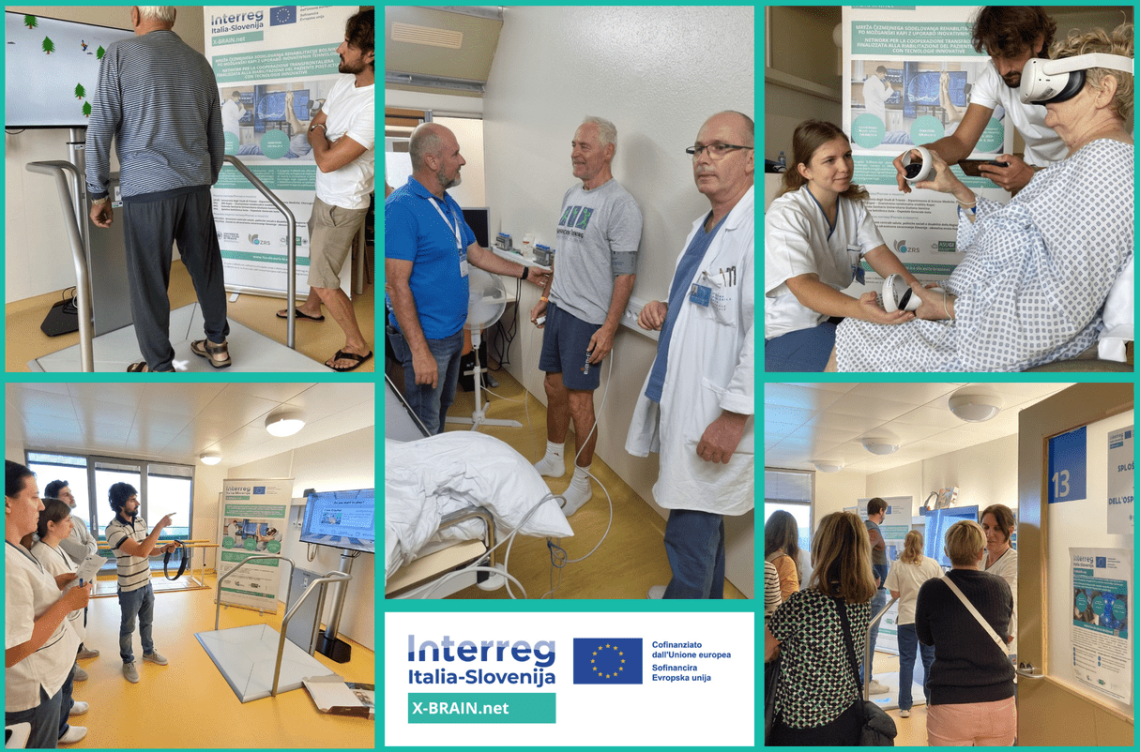
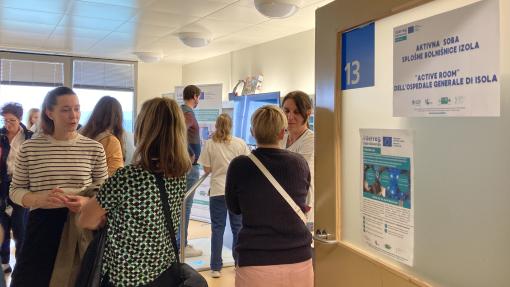
At the Neurology Department of Izola General Hospital and at Cattinara Hospital in Trieste, two active rooms were established and equipped as part of the X-BRAIN.net project, with the aim of supporting the rehabilitation of patients after stroke. Both rooms were equipped with modern ICT and specialised equipment for individually tailored motor-cognitive rehabilitation.
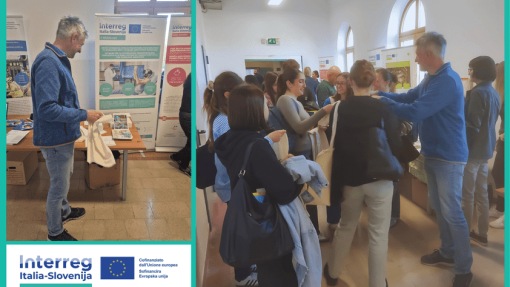
As part of the project, joint cross-border solutions involving video games and virtual reality (VR) were tested and optimised, and appropriate ICT and hardware solutions for use in the active rooms were validated. The active rooms were also presented during open days, first to medical professionals and the general public, where participants had the opportunity to try out the equipment and modern devices used in the rehabilitation of patients after stroke. The active rooms were subsequently presented to the professional public at two events for representatives of the management of other hospitals, with the aim of presenting the solutions and facilitating the exchange of views and experiences in the treatment of patients after stroke.
Between September 2024 and August 2025, approximately fifty patients with acute stroke had the opportunity, within the framework of active rooms, to supplement their traditional rehabilitation treatment with virtual reality rehabilitation. The initiative enabled the direct testing of the integration of innovative tools into the treatment process during the acute phase.
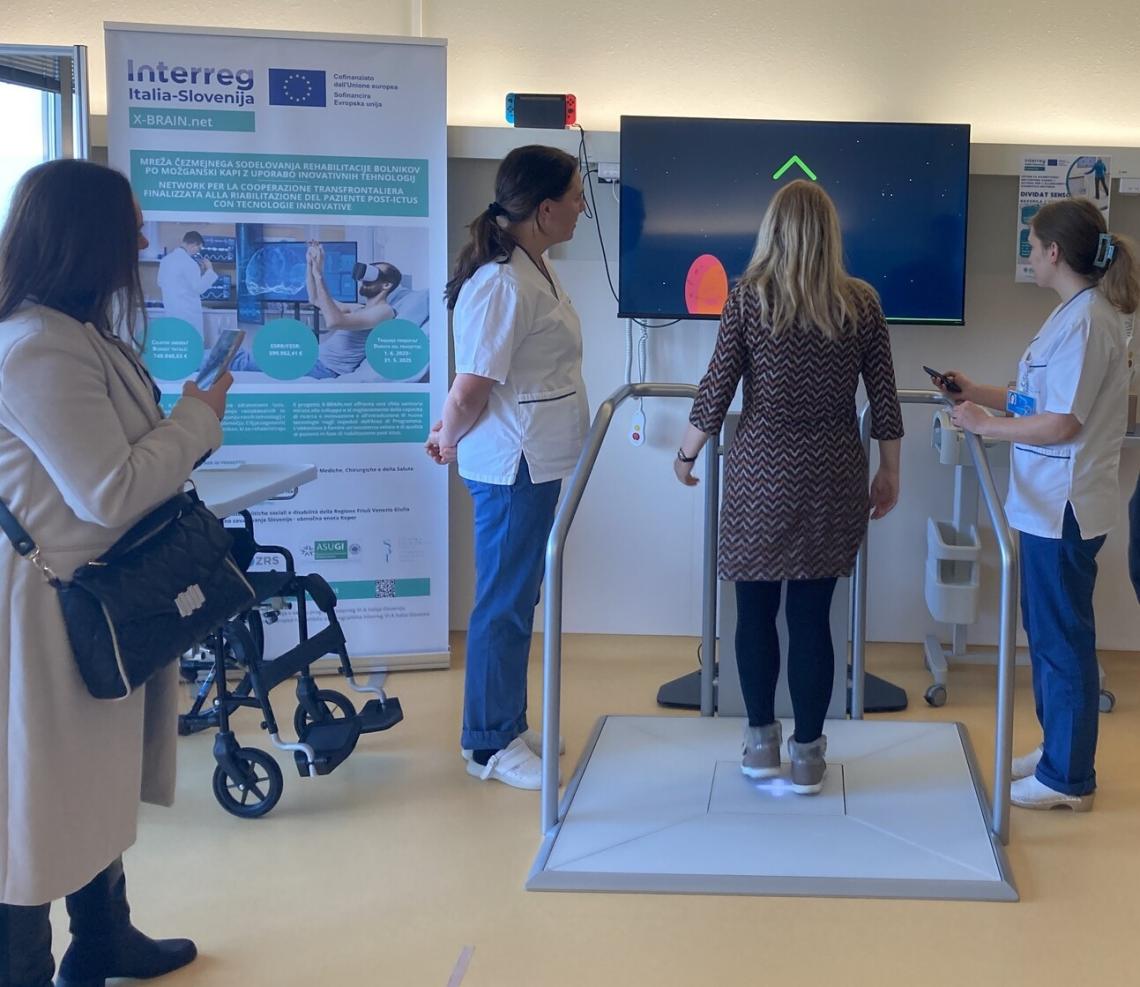
Training material intened for clinical staff for the use of active rooms
As part of the project, educational materials were developed to support the communication and transfer of enhanced knowledge to clinical staff in the use of active rooms. Sustainable posters containing key information were installed in the departments, and structured educational materials were also prepared to guide staff progressively through the different stages of rehabilitation, enabling the effective and appropriate use of the active rooms.
SLO_TRAINING MATERIAL ITA_TRAINING MATERIAL
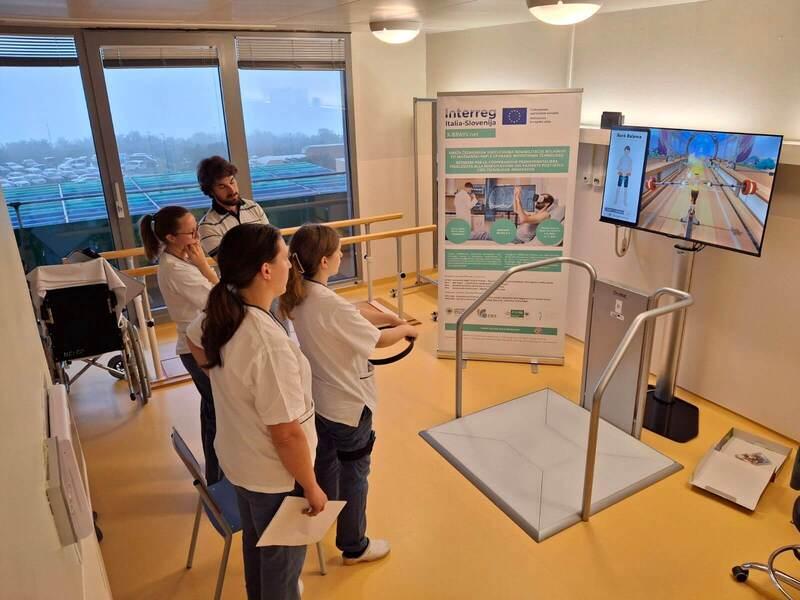
Instructions for the use of active rooms intended for end users – patients
As part of the project, communication and information materials were prepared for the general public and users of the active rooms. The materials, which included instructions for using the active rooms as well as posters and leaflets providing information to users, were written in a clear and accessible manner. They were intended for stroke patients, their relatives, and other interested members of the public, with the aim of providing clear and accessible information on the correct and effective use of the active rooms.
SLO_ACTIVE ROOMS ITA_ACTIVE ROOMS
Evaluation of Rehabilitation outcomes in active rooms
An important part of the research was also the assessment of the appropriateness of the established protocols. Through the analysis of the effectiveness of the established protocols, they were further developed and optimized, with the selected exercises adapted to each identified stage of stroke.
The introduction of virtual reality in hospitals within the framework of the Interreg project enabled the implementation of safe and stimulating exercises that are often difficult to perform using traditional therapy alone. Rehabilitation, enhanced by interactive scenarios and immediate feedback, placed the patient at the center of their own rehabilitation process. Emotional engagement and the playful aspect of virtual environments strengthened motivation and perseverance – key factors for successful functional recovery. The results obtained demonstrated the appropriateness and effectiveness of the established protocols and paved the way for the increasingly systematic integration of immersive technologies into rehabilitation protocols, including in the acute phase, which could have a positive impact on the speed and quality of recovery, as well as on the satisfaction of patients and healthcare staff.
SLO_EVALUATION ACTIVE ROOMS ITA_EVALUATION ACTIVE ROOMS
Video active rooms X-BRAIN.net
| VIDEO X-BRAIN.net | VIDEO X-BRAIN.net 2 | VIDEO X-BRAIN.net 3 |
Publications
doi: 10.1186/s40798-024-00697-6
This study examined the metabolic impacts and fatty acid profiles of 92 male recreational bodybuilders compared to 45 healthy controls to improve indirect doping detection methods. The findings revealed that abusing anabolic steroids, insulin, or growth hormones significantly altered specific metabolic markers, including lowering HDL-cholesterol and elevating liver enzymes (ALT and AST). Ultimately, the researchers concluded that tracking these distinct metabolic and enzyme alterations could help anti-doping organizations better identify hidden insulin and growth hormone abuse in sport.
This study investigated how physical inactivity affects oxidative stress by tracking glutathione levels and γ-glutamyl cycle metabolites in 19 young male volunteers during a short-term bed rest experiment. The data revealed a significant 9±9% drop in glutathione levels during the first 5 days of bed rest, alongside distinct changes in key enzyme activity ratios regulating its synthesis and breakdown. Ultimately, the researchers identified specific metabolic checkpoints in glutathione kinetics during early muscle unloading, highlighting potential therapeutic targets to combat inactivity-induced oxidative stress.
doi: 10.3390/jcm14103313
This study evaluated 469 internal medicine patients with sepsis to examine how variations in plasma glutamine levels impact metabolic disruption, immune responses, and patient survival rates. The results demonstrated that patients with high glutamine levels (hyperglutaminemia) showed significantly lower body temperatures, reduced white blood cell and lymphocyte counts, and more pronounced metabolic derangements. Ultimately, the researchers concluded that increasing plasma glutamine levels are progressively associated with deeper lymphopenia and significantly higher short-term and long-term mortality in sepsis patients
doi: 10.3390/jcm13206155
This prospective cohort study followed 159 physically active, non-obese elderly volunteers over a 10-year period to evaluate if A Body Shape Index (ABSI)—which measures waist circumference relative to height and weight—predicts mortality risk. The findings demonstrated that higher ABSI scores independently predicted 10-year all-cause mortality and were strongly linked to reduced cardiovascular fitness (VO₂max) and increased systolic blood pressure. Ultimately, the researchers concluded that ABSI is a reliable tool for long-term mortality prediction in active, non-obese older adults and can significantly enhance risk stratification in clinical settings.
Statin-Intolerant Patients Exhibit Diminished Muscle Strength Regardless of Lipid-Lowering Therapy
doi: 10.3390/jcm14041221
This study compared body composition and muscle strength between statin-intolerant patients experiencing muscle symptoms and a matched control group over a 45-month follow-up period. The findings revealed that statin-intolerant individuals exhibited higher body mass index (BMI), elevated fat mass percentage, and significantly weaker handgrip strength in their non-dominant arms. Ultimately, the researchers concluded that statin intolerance is clinically associated with poorer muscle quality, particularly in lesser-exercised muscles.
https://doi.org/10.1093/infdis/jiae370
This study evaluated 12 immune response biomarkers in 113 internal medicine patients with bacterial sepsis to improve risk stratification and predict mortality outcomes. The researchers found that elevated levels of specific biomarkers, particularly IRAK-M and galectin-1, served as strong indicators for higher short-term and 1-year mortality rates. Ultimately, the study concluded that these two biomarkers can successfully identify three distinct sepsis phenotypes with varying prognoses, offering promising new pathways for targeted therapeutic trials.
Epidemiology of atherosclerotic cardiovascular disease in polygenic hypercholesterolemia with or without high lipoprotein(a) levels
https://doi.org/10.3389/fcvm.2023.1272288
The researchers conducted a retrospective study comparing patients with polygenic hypercholesterolemia who had high lipoprotein(a) [Lp(a)] levels with those who did not. They analyzed medical records to evaluate the occurrence of cardiovascular events over a median follow-up of 10 years. They found that patients with elevated Lp(a) experienced cardiovascular events more frequently and about seven years earlier. Men had a higher risk of coronary artery disease, while women with elevated Lp(a) showed a greater risk of peripheral artery disease. Overall, high Lp(a) was associated with a greater and earlier burden of atherosclerotic cardiovascular disease.
Efficacy of a somatostatin analogue in a case of obscure gastrointestinal bleeding
The researchers described the case of an 89-year-old woman with severe obscure gastrointestinal bleeding that could not be treated with standard diagnostic or therapeutic procedures. After multiple blood transfusions failed to stabilize her condition, they started treatment with the somatostatin analogue octreotide. The patient's bleeding stopped, hemoglobin levels improved, and no further transfusions were needed. She was discharged in stable condition and remained well at follow-up. The authors concluded that octreotide may be an effective option for refractory obscure gastrointestinal bleeding when conventional treatments are not feasible.